Choose your stop
The Japanese tea house: how it is built and where to see one
Brief answer
A Japanese tea house, or chashitsu, is a purpose-built room with a tatami floor and a hearth, reached through a tea garden and, in Rikyu's design, an entrance so small that every guest crawls in.
The room
Map of 18 stops
Uji and the tea houses of Kyoto, pin by pin
Select a route, then tap a marker or stop to see its note and open Google Maps.
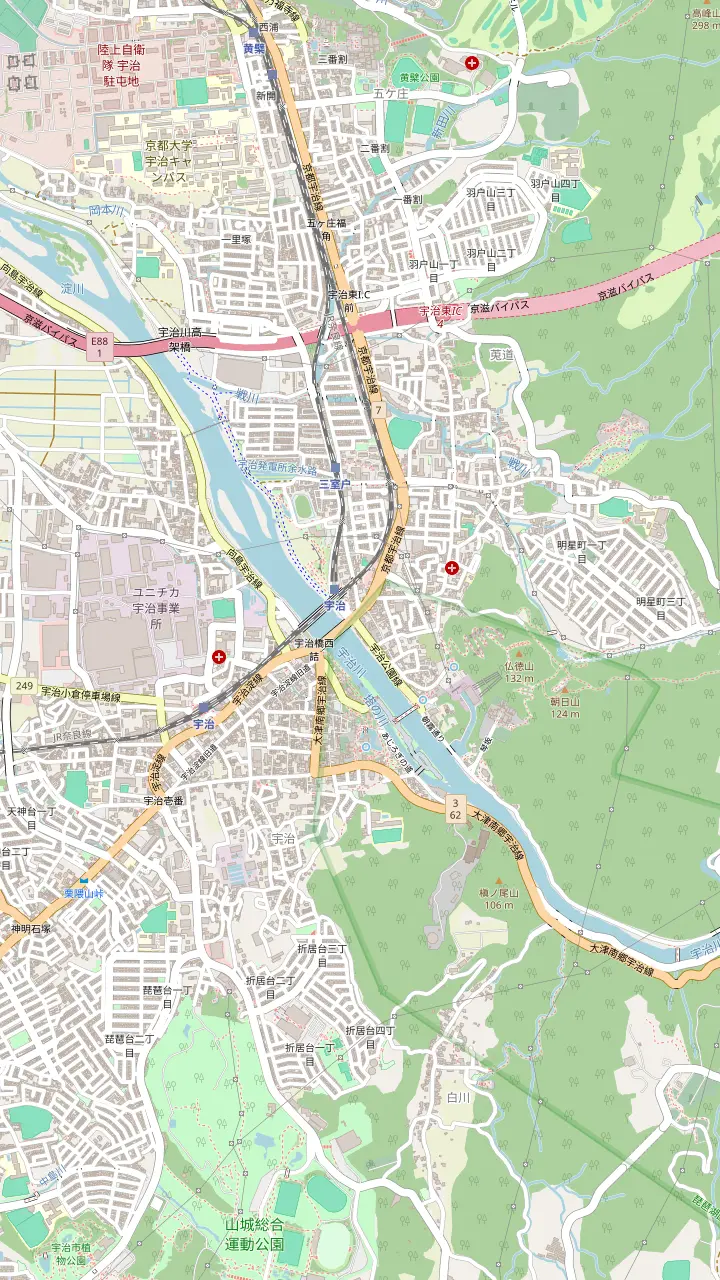
The Nara Line from Kyoto Station takes about 17 minutes.
Google MapsA tea shop selling tea since 1854, about a minute from this station.
Google MapsThe municipal tea ceremony house stands on the west bank of the river.
Google MapsFounded in 1052 and enshrining the Amida Buddha.
Google MapsIn business since 1160, run by the 24th head of the same family.
Google MapsFirst built around 646 and a setting in The Tale of Genji.
Google MapsFrom Demachiyanagi, the Keihan Line takes about 40 minutes.
Google MapsA 4 min walk from Keihan Uji Station and 12 min from JR Uji Station.
Google MapsThe matcha-making workshop here lasts about 40 minutes.
Google MapsThe oldest structures date from 1060.
Google MapsHost of the Uji Tea Festival on the first Sunday of October.
Google Maps
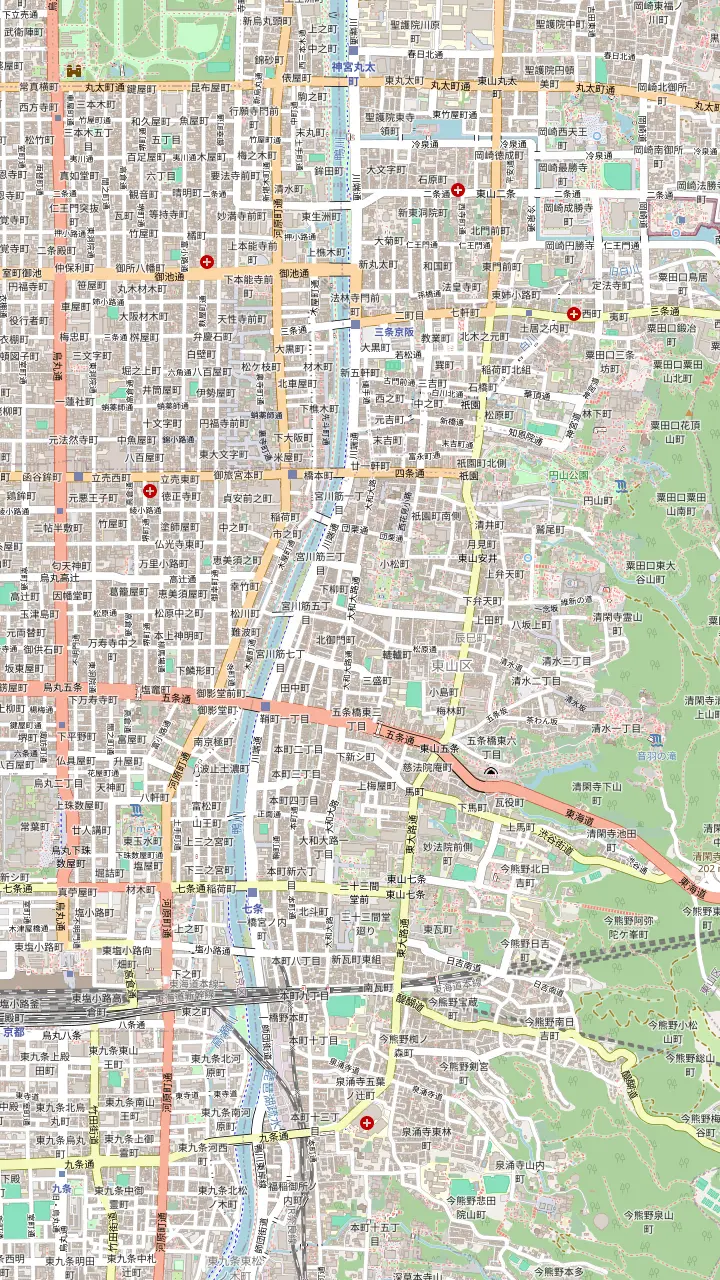
Home of two tea houses, Kasa-tei and Shigure-tei, credited to Rikyu.
Google MapsThis site's garden tea house stands near Kiyomizu-dera.
Google MapsThe Ju-An tea ceremony listing is set at this temple.
Google Maps
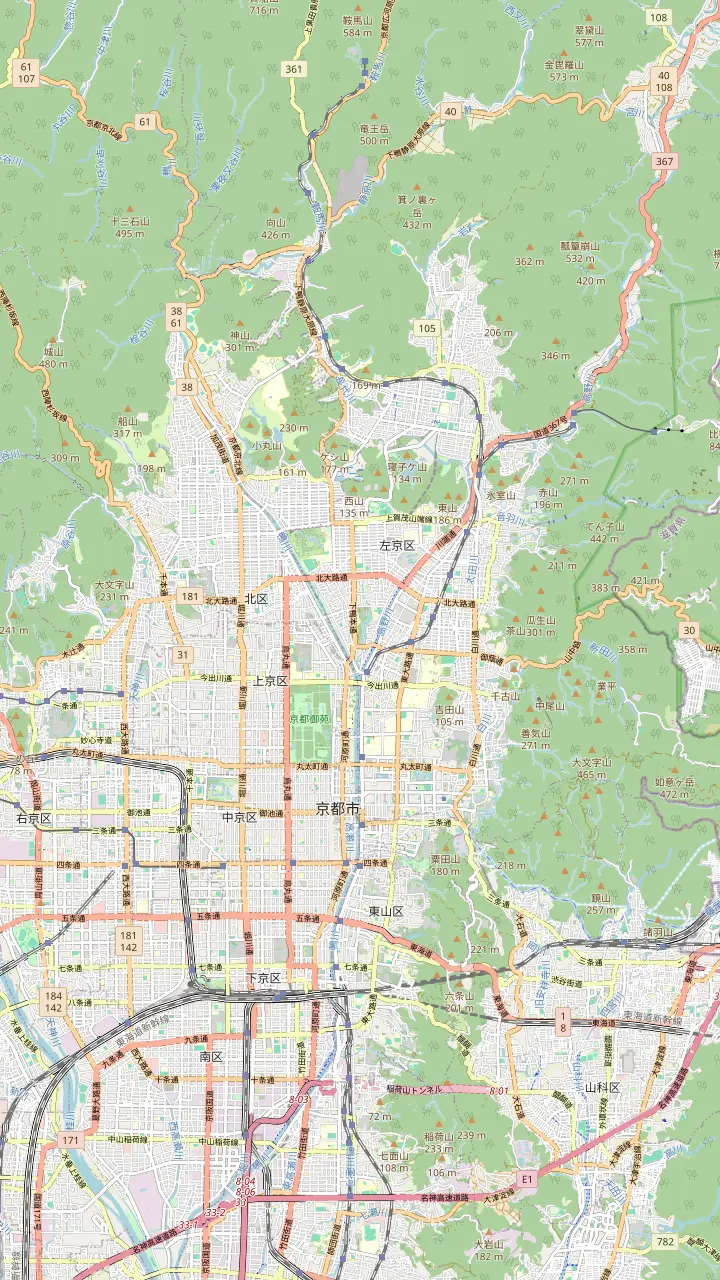
The Togudo here holds Dojinsai, thought to be the origin of the tea room.
Google MapsThe Urasenke chanoyu lesson runs here when an exhibition is showing.
Google MapsRikyu's grave is at Jukoin temple within this compound.
Google Maps
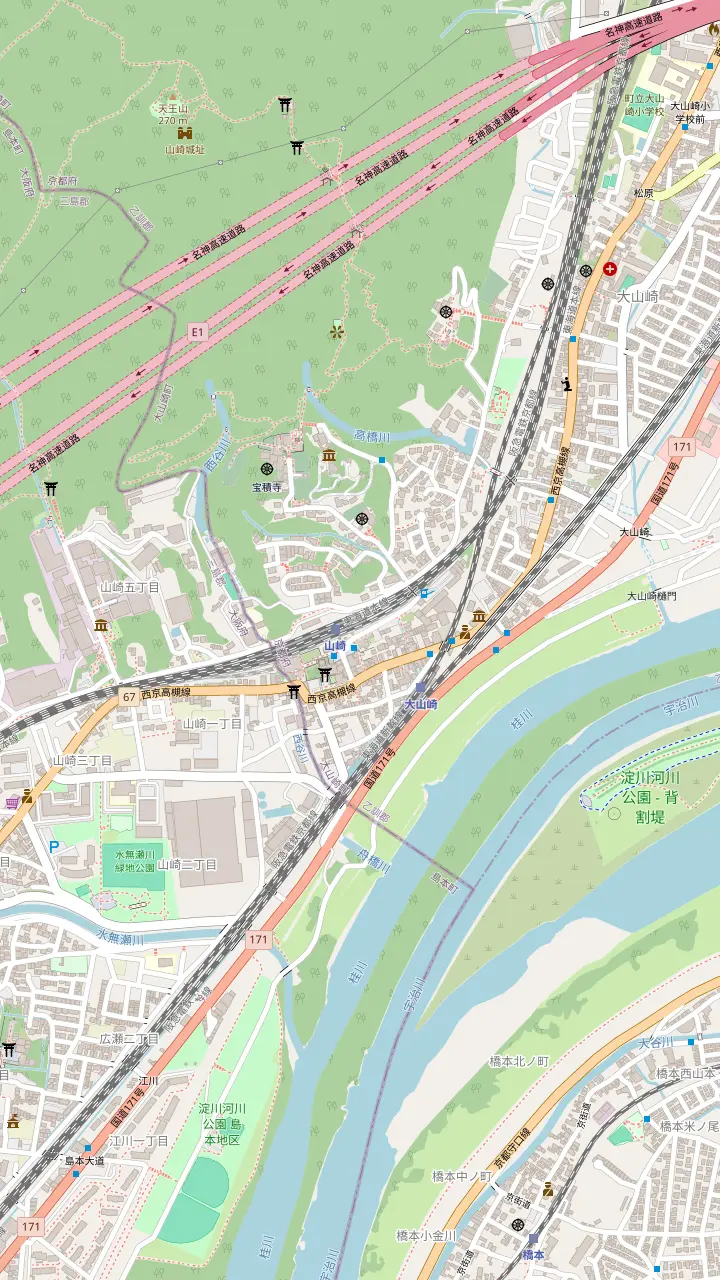
Home of Taian, the two-tatami tea room associated with Rikyu.
Google Maps
Maps © OpenStreetMap contributors
A tea house is a small room with big ideas about rank, nature and quiet. Here is how it works, why the door is low, and which Kyoto tea houses and rooms are worth finding on a map.
Editorial team, teaceremonykyoto.click · Updated November 6, 2026 · A 6 min read
Key facts
- The roomA chashitsu has a tatami floor with a hearth built into it, and is deliberately rustic.1,2
- One unitThe tea room and the garden path form a single unit for a gathering.3
- The doorRikyu's crawl-in entrance made every guest enter the same way, whatever the rank.4
- The smallestTaian, a two-tatami room, can be seen at Myokian temple in Yamazaki.5
- In KyotoKodai-ji has two tea houses, Kasa-tei and Shigure-tei, credited to Rikyu.6
What a Japanese tea house actually is
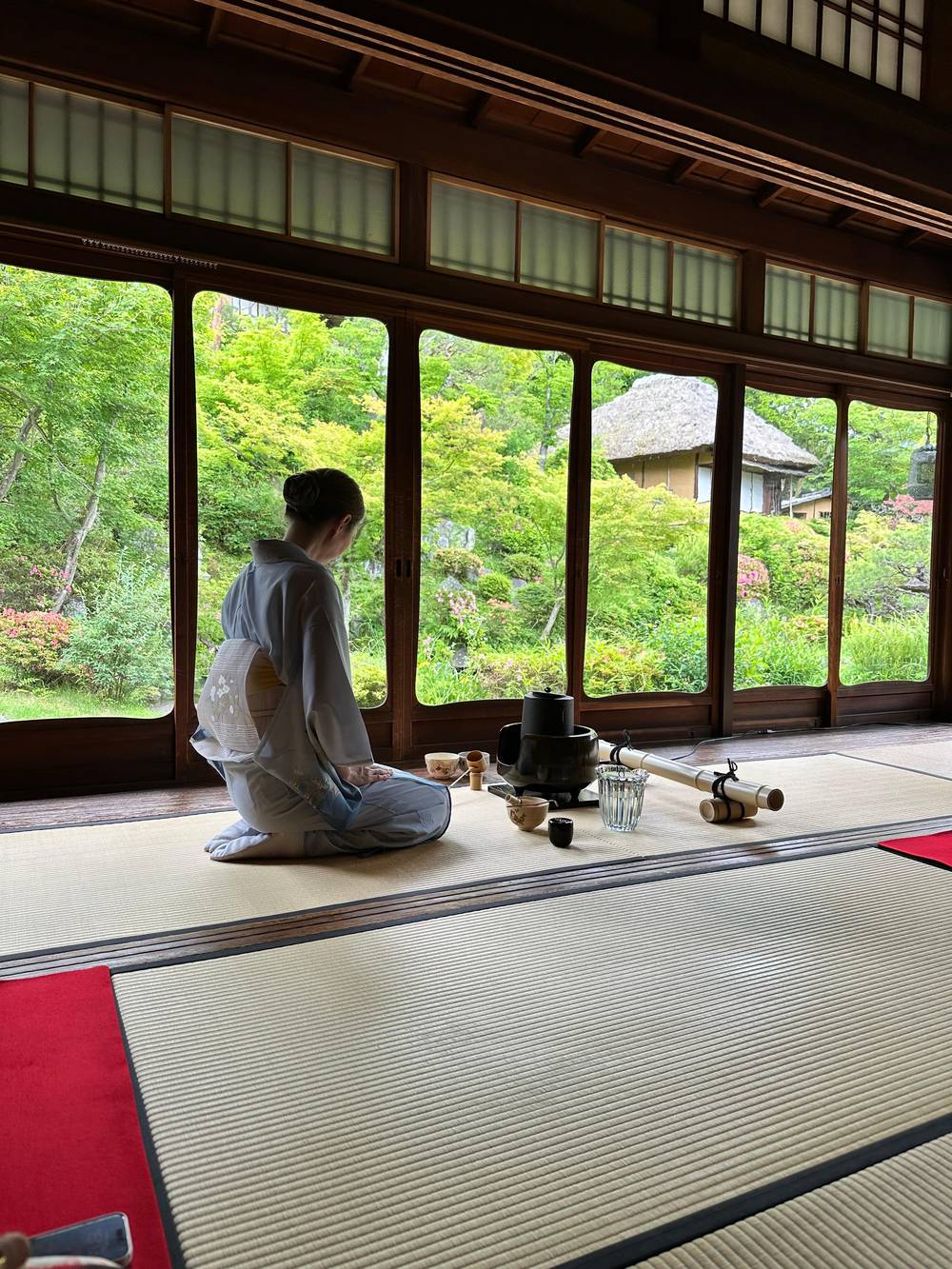
A Japanese tea house is a place built for a single purpose: preparing and drinking matcha with other people. Traditionally the ceremony takes place in a purpose-built chashitsu, featuring a tatami-mat floor with a hearth built into it, and the materials and design are deliberately rustic.1,2 The Japanese tea room is a quiet box with a few strong features, not a shop or a restaurant.
The room does not stand alone. The Omotesenke school writes that the tea room, called the chashitsu, and the tea garden, the roji, form a single unit for the purpose of holding a tea gathering.3 Guests pass through the small kuguri entrance and walk through the tea garden to reach the room.7
That is why a visit feels like a walk as well as a seat. You cross a threshold, then a path, then a basin, then a door, and each of them tells your body to slow down before the host has said a word.
Notable rooms
Tea rooms worth knowing by name
| Tea room | Size and feature | Where |
|---|---|---|
| Taian | A tiny two mat space16 | Myokian temple, Yamazaki5 |
| Dojinsai | Four-and-a-half mats with an open hearth17 | Ginkaku-ji, the Togudo18 |
| Yuin | Four-and-a-half tatami, ceiling 1.75 meters19,20 | Urasenke, Kyoto21 |
| Konnichian | One tatami plus a daime mat22 | Urasenke, Kyoto23 |
| Kasa-tei & Shigure-tei | Rustic tea houses credited to Rikyu24 | Kodai-ji, Higashiyama25 |
| Jikoin | A temple designed as one large tea room26 | Nara, established 166327 |
Rooms are listed by the sources' own descriptions; visiting arrangements differ, so check with each place.
Reading the room: tatami, alcove and hearth
The room is organized around three things. The floor is tatami, in a number of mats that gives the room its name. The tea room consists of tatami for the guests and for the host, and the alcove and the hearth are arranged to make it easy to entertain the guests.11 The toko, the alcove, began as a part of the room built one level higher for people of high status to sit on.12
Guests look before they sit. On entering, they first look at the hanging scroll in the alcove, then at the hearth, the kettle and the utensils on the shelf.10 You are expected to say something about the scroll or the seasonal flower arrangement.13 In a short session that is simply a good habit: one glance at the alcove tells you the season and the host's mood.
The size of the room has a history. Takeno Joo simplified the four-and-a-half-mat tea room by replacing white-papered walls with unpapered earthen ones, using bamboo lattice instead of fine wood, and making the alcove narrower and framing it with natural wood.14 A low ceiling and a small entrance present no hindrance to the flow of movement in chanoyu.15
The approach
From the waiting room to the hearth
Wait
Shoes and waiting room
Guests take off their shoes before being shown into the waiting room.8
Walk
The garden path
Guests pass through the small kuguri entrance and walk through the tea garden.7
Wash
Stone basin
Hands are washed and the mouth rinsed at a stone basin.9
Crouch
The small door
Rikyu's entrance makes guests crawl through, whatever their rank.4
Look
Scroll and hearth
Guests view the alcove scroll first, then the hearth, kettle and shelf.10
Sit
Tatami and hearth
The floor is tatami with a hearth built into it.1
Rikyu and the tiny room
Sen no Rikyu, who lived from 1522 to 1591, pushed the idea furthest.29 He made a revolutionary change to a tea room that was exactly as the word soan implied, a tiny two mat space in which only wabi-cha could be done, and the Tai-an tea room at Myoki-an, a Rinzai temple in Yamazaki in Kyoto, shows it.16 Urasenke says Taian, the two-tatami room, can be seen today at Myokian temple in Yamazaki, a suburb of Kyoto city.5
Power noticed. Hideyoshi was invited to that tea room and was completely captivated, so he built a two mat tea room in Osaka Castle.30 The older ideal had been the four-and-a-half mat room: Dojinsai, in the Togudo at Ginkaku-ji, has an open hearth and is thought to be the origin of the tea room.17
Rikyu's own story ended in Kyoto. He continued to study Zen at Daitokuji,31 and his grave is at Jukoin temple within the Daitokuji compound.32 If you want to feel the connection, plan an afternoon that touches both the temples of Rikyu and one tea room where you can sit.
Which room for you?
Which tea house suits your day?
Match a row to your interest
If I want the oldest idea of a tea room
Seek out Dojinsai
It is thought to be the origin of the tea room.17
If I want the tiniest room
Look for Taian
It is a tiny two mat space at Myokian temple.16
If I want a temple garden walk
Visit Kodai-ji
It has two tea houses credited to Rikyu.6
If I want to sit in a garden tea house
Book the Sannenzaka session
The session lasts 45 minutes with an English-speaking instructor.
If I prefer chairs to the floor
Try the table style
The ryurei style employs tables and chairs.28
The crawl-in door and the low ceiling
The most famous feature is the smallest door. By designing an entrance to the tea hut through which guests had to crawl regardless of rank, Rikyu sought to eliminate the social distinctions which separated human beings from each other.4 Inside, everyone arrives at the same height.
Urasenke's Yuin tea house shows the details. It has a conventional four-and-a-half-tatami layout, probably similar to Rikyu's tea house at his Jurakudai residence, and the crawl-through doorway, the nijiriguchi, is in the east corner of the south wall.19,48 Its ceiling is only 1.75 meters from the floor, with a skylight that can be pushed open through the thatched roof.20,49
Smaller still is Konnichian, the one-tatami-plus-daime room, the tea room whose name is synonymous with Urasenke.22 It also has a crawl-through doorway beneath a large window at the south end of the one-tatami guests' area.23 Sotan named it Hut of This Day, after a phrase his Zen master had written.50
Price a session
What sitting in a Kyoto tea house costs
Enter your party size and read off three starting prices
Weigh up 3 options
What sitting in a Kyoto tea house costs
Enter your party size and read off three starting prices
- Garden tea house45 minutes · starting at, per person $49
≈
View - Ju-An tea ceremony70 minutes · starting at, per person $29
≈
View - Tea lesson45 minutes · starting at, per person $22
≈
View
Starting prices on GetYourGuide, exchanged at the ECB reference rate. The booking page gives the exact price.
The garden path before the door
Before the room comes the roji. At Urasenke the walkway is surrounded by dewy moss and luxuriant foliage, and gives a sense of leaving the hustle and bustle of everyday life for a mountain hermitage in the city.51 The waiting room, the Mushikiken, has a main room of five tatami and an anteroom of three daime-size tatami.52
In a formal tea event, the host and guest greet each other silently, crouching, at the garden gate.53 The guests then wash their hands and rinse their mouths at the basin.9 The same sequence, shortened, is what a visitor sees in a garden tea house in Higashiyama.
Treat the path as part of the room. When a tea house has a garden, as in the Sannenzaka area near Kiyomizu-dera, the ceremony is read against the seasons of that garden, and the garden changes your sense of how big the tea room is.
Video
A short introduction to the chashitsu, the Japanese tea room
Kimono Kitty on YouTube · The video stays unloaded until you press play.
By designing an entrance to the tea hut through which guests had to crawl regardless of rank, he sought to eliminate the social distinctions which separated human beings from each other.
On the ground
A checklist for finding and entering a tea house
Before you go3
At the threshold3
Tea houses you can find in Kyoto
Which is the best tea house in Kyoto depends on what you want to see. For architecture by Rikyu's hand, Kodai-ji has two tea houses, Kasa-tei and Shigure-tei, described as classics designed by Sen-no-Rikyu.6 The roof of Kasa-tei is made of logs and thin bamboo, which gives it the look of an umbrella.54 Kodaiji is a Zen Buddhist temple founded in 1605,25 and from Kyoto Station bus 206 to the Higashiyama Yasui stop leaves it a 7-minute walk away.47
For the origin of the tea room, go to the Togudo at Ginkaku-ji, which still exists.18 For the tiniest room, Taian lies at Myokian temple in Yamazaki, which is outside the city; check the temple's visiting arrangements before you set out.5 For a lesson in a chair-friendly style, the Urasenke Center in Kyoto teaches ryurei, which employs tables and chairs, when an exhibition is showing.28,46
If you prefer to sit in a tea house rather than look at one, there are Kyoto listings for that. The Ju-An tea ceremony at Jotokuji Temple is a 70 minute session for a small group limited to 10 participants, with an English instructor, from $29. Nara has Jikoin, designed in 1663 as one large tea room, though it is not in Kyoto.26,27
Choosing a tea house for your own ceremony
A garden tea house gives the whole picture in a short time. The session booked from this site is a 45 minute ceremony in the Sannenzaka area near Kiyomizu-dera, with an English-speaking instructor, from $49. Kodai-ji and its tea houses are close by, since Ninen-zaka and Sannen-zaka streets and Kiyomizudera Temple are all easily accessed from there.55
If your knees or schedule matter more than the architecture, choose by seating. Tatami benches at Taiho-an in Uji exist for guests not used to seiza,56 and a separate Kyoto lesson with a licensed tea master lasts 45 minutes, with English and Japanese instruction, from $22.
In the end the tea house is only half of the experience; the other half is the person who prepares the bowl. Pick the room that makes you want to sit down quietly, and then pay attention to how the host moves inside it.
FAQ
Questions answered quickly.
What is a Japanese tea house called?
A tea ceremony traditionally takes place in a purpose-built chashitsu with a tatami floor and a hearth in it.1
Why is the tea room door so small?
Rikyu designed an entrance guests had to crawl through regardless of rank, to remove social distinctions.4
How small is the smallest tea room?
Rikyu's Tai-an tea room at Myoki-an, a Rinzai temple in Yamazaki, is a tiny two mat space.16
How low is the ceiling in a tea house?
The ceiling of the Yuin tea house at Urasenke is only 1.75 meters from the floor.20
Where are Rikyu's tea houses in Kyoto?
Kodai-ji has Kasa-tei and Shigure-tei, described as classics designed by Rikyu.6
What is the alcove for?
Guests look first at the hanging scroll in the alcove, then at the hearth, the kettle and the shelf.10
Can I book a ceremony in a garden tea house?
A 45 minute session with an English-speaking instructor is listed from $49.
Sources
- Japan National Tourism Organization · Japanese Tea Ceremony ↩
- Japan National Tourism Organization · Japanese Tea Ceremony ↩
- Omotesenke Fushin'an (official English website) · The tea room and the tea garden ↩
- Urasenke Foundation (Urasenke Konnichian official English website) · About Chado ↩
- Urasenke Foundation (Urasenke Konnichian official English website) · About Urasenke Chado ↩
- Kyoto City Tourism Association · Kodai-ji Temple ↩
- Omotesenke Fushin'an (official English website) · The tea room and the tea garden ↩
- Japan National Tourism Organization · Japanese Tea Ceremony ↩
- Japan National Tourism Organization · Japanese Tea Ceremony ↩
- Omotesenke Fushin'an (official English website) · Forms and behavior: the first half of the tea event ↩
- Omotesenke Fushin'an (official English website) · The tea room and the tea garden ↩
- Omotesenke Fushin'an (official English website) · The tea room and the tea garden: displaying objects in the zashiki ↩
- Japan National Tourism Organization · Japanese Tea Ceremony ↩
- Urasenke Foundation (Urasenke Konnichian official English website) · About Chado ↩
- Omotesenke Fushin'an (official English website) · The tea room and the tea garden ↩
- Omotesenke Fushin'an (official English website) · The tea room and the tea garden: the perfection of the soan tea room ↩
- Omotesenke Fushin'an (official English website) · The tea room and the tea garden: the perfection of the soan tea room ↩
- Omotesenke Fushin'an (official English website) · The tea room and the tea garden: the perfection of the soan tea room ↩
- Urasenke Foundation (Urasenke Konnichian official English website) · About Urasenke Chado ↩
- Urasenke Foundation (Urasenke Konnichian official English website) · About Urasenke Chado ↩
- Urasenke Foundation (Urasenke Konnichian official English website) · About Urasenke Chado ↩
- Urasenke Foundation (Urasenke Konnichian official English website) · About Urasenke Chado ↩
- Urasenke Foundation (Urasenke Konnichian official English website) · About Urasenke Chado ↩
- Japan National Tourism Organization · Kodaiji Temple ↩
- Japan National Tourism Organization · Kodaiji Temple ↩
- Japan National Tourism Organization · Masters Series: Part One The Art of Japanese Tea Ceremony ↩
- Japan National Tourism Organization · Masters Series: Part One The Art of Japanese Tea Ceremony ↩
- Urasenke Foundation (Urasenke Konnichian official English website) · Chanoyu Experience ↩
- Urasenke Foundation (Urasenke Konnichian official English website) · About Chado ↩
- Omotesenke Fushin'an (official English website) · The tea room and the tea garden: the perfection of the soan tea room ↩
- Urasenke Foundation (Urasenke Konnichian official English website) · About Chado ↩
- Urasenke Foundation (Urasenke Konnichian official English website) · About Urasenke Chado ↩
- Japan National Tourism Organization · Uji
- Another Kyoto Official Travel Guide · Experience the World of Tea with All Five Senses in "Kyoto Tea Country"
- Another Kyoto Official Travel Guide · Experience the World of Tea with All Five Senses in "Kyoto Tea Country"
- Another Kyoto Official Travel Guide · Experience the World of Tea with All Five Senses in "Kyoto Tea Country"
- Japan National Tourism Organization · Uji
- Japan National Tourism Organization · Uji
- Japan National Tourism Organization · Uji
- Japan National Tourism Organization · Uji
- Japan National Tourism Organization · Uji
- Another Kyoto Official Travel Guide · 5 Amazing Experiences in Uji City Related to Uji Tea
- Another Kyoto Official Travel Guide · Experience the World of Tea with All Five Senses in "Kyoto Tea Country"
- Japan National Tourism Organization · Uji
- Japan National Tourism Organization · Uji
- Urasenke Foundation (Urasenke Konnichian official English website) · Chanoyu Experience ↩
- Japan National Tourism Organization · Kodaiji Temple ↩
- Urasenke Foundation (Urasenke Konnichian official English website) · About Urasenke Chado ↩
- Urasenke Foundation (Urasenke Konnichian official English website) · About Urasenke Chado ↩
- Urasenke Foundation (Urasenke Konnichian official English website) · About Urasenke Chado ↩
- Urasenke Foundation (Urasenke Konnichian official English website) · About Urasenke Chado ↩
- Urasenke Foundation (Urasenke Konnichian official English website) · About Urasenke Chado ↩
- Omotesenke Fushin'an (official English website) · Forms and behavior: the first half of the tea event ↩
- Kyoto City Tourism Association · Kodai-ji Temple ↩
- Japan National Tourism Organization · Kodaiji Temple ↩
- Another Kyoto Official Travel Guide · Experience the World of Tea with All Five Senses in "Kyoto Tea Country" ↩
Related reading