Most reviewed
The Gion room
Orizuruya
- Length1.5 to 2 hours
- GroupUp to 10
- Rating4.8 from 1,709
Guides
Language
Currency
See what is open$49 and up · cancel at no chargeChecklist you can tick
Kyoto: Kimono Tea Ceremony at Orizuruya Gion
★ 4.9 · 1,709 written reviews
Brief answer
A kimono tea ceremony in Kyoto is optional, because demonstrations for visitors do not require formal attire, though several Kyoto venues bundle kimono dressing and hair styling with the tea.
Dress code and manners
Your list · 9 items
Tick off each point as you complete it. This device keeps your progress.
0 / 9 ready
Ready to go. Only the booking is left: a bowl of matcha in a garden near Kiyomizu-dera.
Save a placeA kimono and tea ceremony bundle puts the dressing, the hair and the matcha in one booking. These Kyoto listings differ in arrival time, group size, add-ons and price, so here is the comparison.
Editorial team, teaceremonykyoto.click · Updated November 6, 2026 · A 7 min read
Key facts
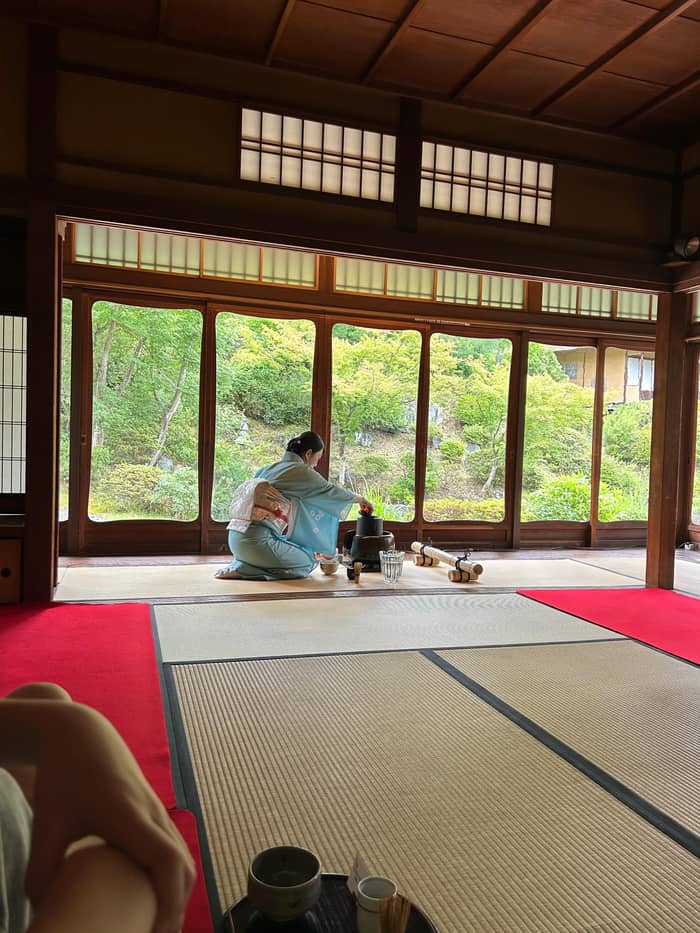
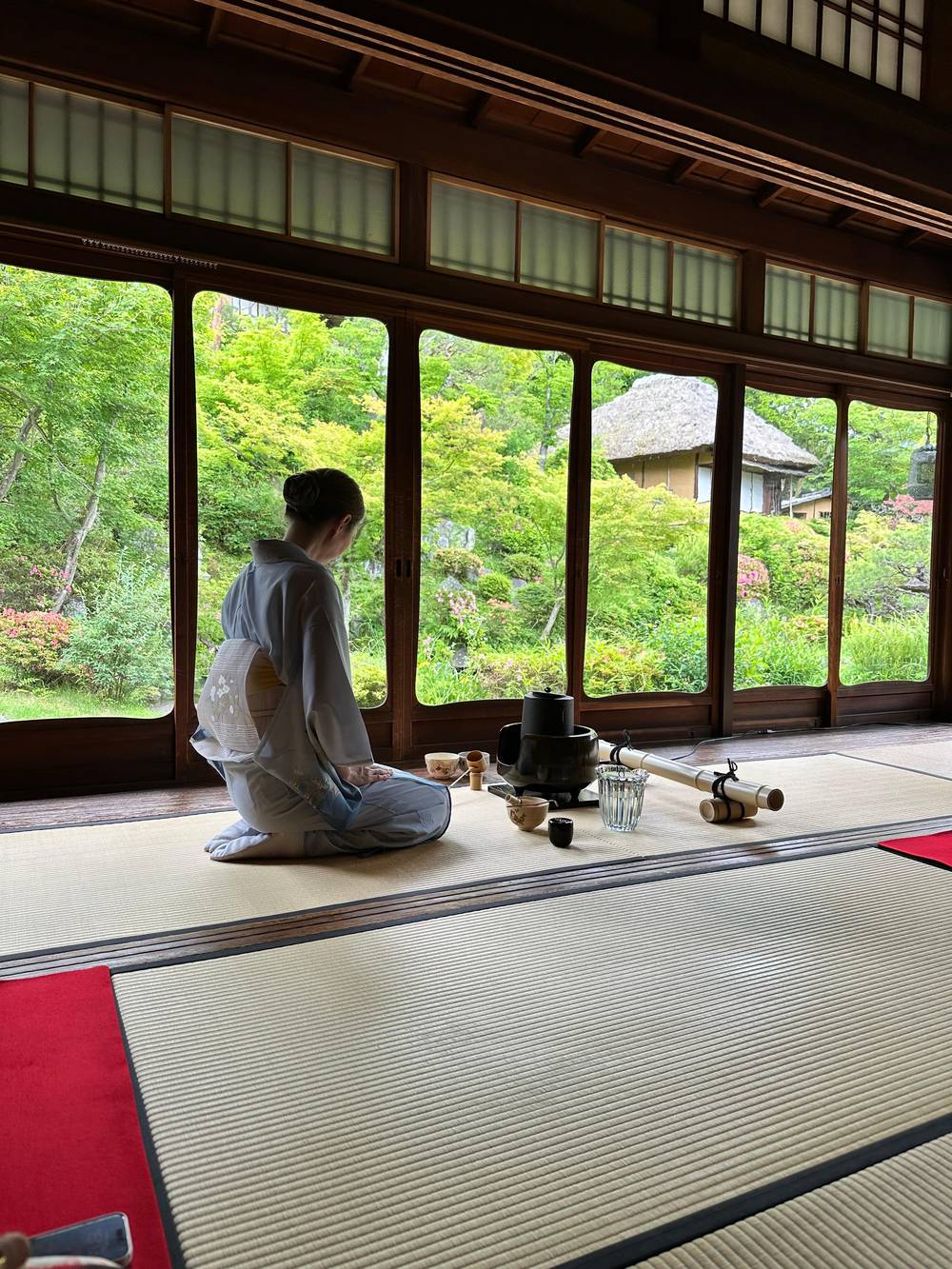
A kimono and tea ceremony in Kyoto is a pairing that makes sense on paper: the tea master wears a kimono for the ritual, and the room is the kind of place where the garment looks at home. The Japan National Tourism Organization notes that the tea master will invariably wear a kimono, and that guests at formal occasions should follow suit.1 It adds that demonstrations put on for visitors do not require formal attire, so wearing one is a choice, not an entry rule.1
That choice is worth making deliberately. A kimono changes how you sit, how you move and how long you spend before the first bowl, so it suits travelers who want the photographs and the atmosphere as much as the tea. If you would rather keep the focus on the ritual, the Japan National Tourism Organization's own description of one Kyoto venue says guests can take part casually in their own clothes or put on an authentic kimono.2
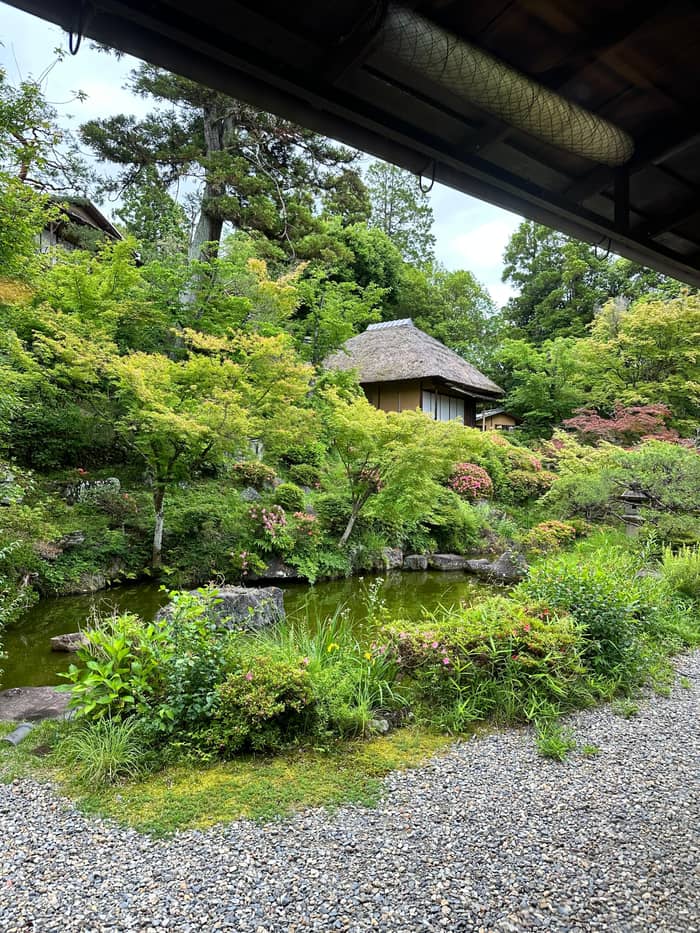
Our own tour, the 45-minute garden tea house ceremony near Kiyomizu-dera, lists no kimono, so it is the plain-clothes option on this site. The listings below add the garment, and each one handles it differently: who dresses you, how long it takes, whether hair is included and whether you leave the building in it. Match those details to the day you have planned. That makes the first question simple: do you want the garment, or the quiet?
Kimono bundles compared
| Listing | Length | Kimono detail | From |
|---|---|---|---|
| Orizuruya, Gion | 1.5 to 2 hours | Over 200 designs, hair for women | $49 |
| Karasuma-Shijo | 1.5 hours | Dressing comes first | $53 |
| Machiya rental | 50 minutes to 3 hours | Stroll, return by 5:30 PM | $33 |
| Tondaya, Nishijin | 1.5 hours | Silk over your own clothes | $153 |
| Fushimi table-style | 1.5 hours | Arrive 30 minutes early | $45 |
Each price is a from price, so the final fare depends on the date, the option and the group.
The Orizuruya listing in Gion is the most reviewed kimono ceremony on this page, with 4.8 from 1,709 reviews, the guide at 4.9 and value for money at 4.8. It lasts 1.5 hours, or 2 hours if you add calligraphy, and the group is limited to 10 participants. The fare starts from $49. The two-hour version adds calligraphy to the same kimono and tea program, which is the main reason the stated range runs from 1.5 to 2 hours.
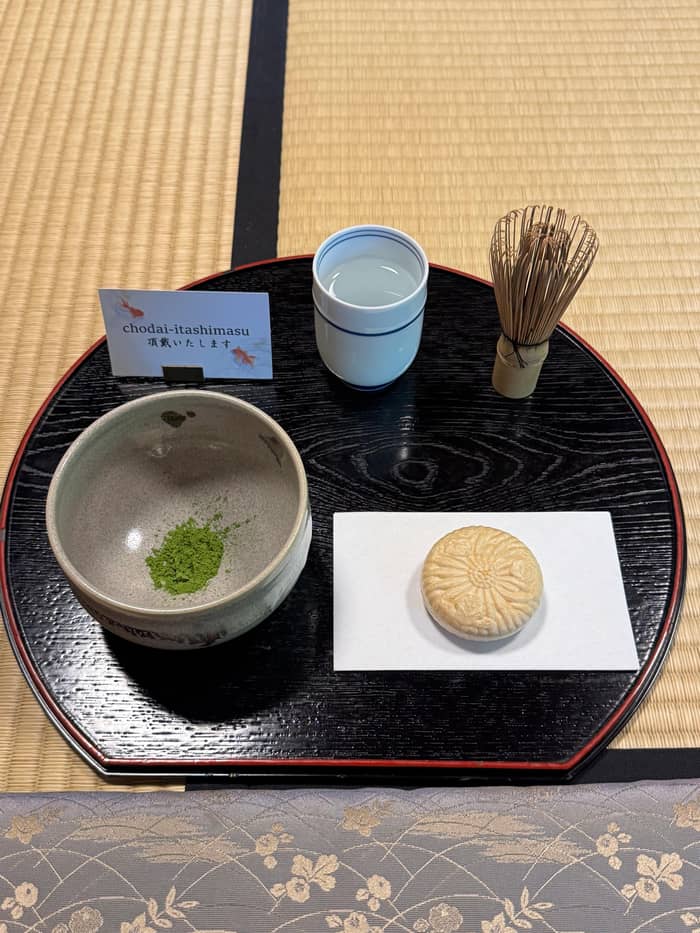
You choose your kimono from over 200 designs, with staff helping you dress, and women receive hair styling as part of the booking. Then you learn to whisk matcha with a bamboo whisk and make your own bowl, served with sweets from a century-old confectionery. Instruction is in English, and the listing offers the skip-the-line label for the meeting point. The experience is built for people new to the ritual, since the listing promises immersion in Japanese culture without the fear of a faux pas.
The meeting point is in Gion, about 10 minutes on foot from Kawaramachi Station and 7 minutes from Gion-Shijo Station. That puts it close to the district that the Japan National Tourism Organization describes as the place where you might even glimpse a maiko.3 Free cancellation runs up to 24 hours before. Skip-the-line status is a convenience at the door, not a promise about the ceremony itself.
How much feedback exists
Counts come from each listing page and show how much feedback exists, not which is better.
The Karasuma-Shijo session opens with kimono dressing and then moves to a tea room where a tea master shows the steps and teaches history, tools and etiquette. It runs 1.5 hours from $53 and holds 4.9 from 493 reviews. Two figures disagree on the group size: the listing is marked limited to 6 participants, while its notes warn of about 12 to 14 when guests from other booking sites join.
In Nishijin, the Tondaya listing sets the ceremony inside a 140-year-old machiya recognised as an important cultural property, with silk kimono fitted over your own clothes and a tour of the house. It starts from $153, has a private group option and carries 4.3 from 317 reviews. Its notes say not all staff speak fluent English and that a translation device may be used. Treat the premium as a venue fee: the listing sells the building and its history as much as the tea.
A third model is the rental that lets you leave. One machiya listing runs from 50 minutes for the ceremony alone to 3 hours with a kimono rental, starts from $33, and asks you to return the kimono to the shop by 5:30 PM on the same day. The kimono tea ceremony at Maikoya in Kyoto, as the Japan National Tourism Organization describes it, runs sessions of six or so people with private options available.4
A short chooser
Say what you want from the garment, then choose the listing built around it.
If I want hair styling and a Gion address
The Orizuruya room
It offers hair styling for women and a Gion meeting point.
If I want to wear it out afterwards
The machiya rental
It lets you stroll and return the kimono by 5:30 PM.
If I want a heritage house
Tondaya in Nishijin
It sits in a 140-year-old machiya recognised as an important cultural property.
If I want to skip the kimono
Our garden tea house
It lists no kimono and runs 45 minutes.
If I want privacy for my group
A private kimono session
One whole-machiya listing starts from $63.
Kimono moods
Most reviewed
Orizuruya
Keep it for a stroll
Machiya townhouse
Silk kimono
Tondaya, Nishijin
Dressing takes time, and the listings say so. The 45-minute lesson with a licensed Urasenke tea master lets you add a kimono but asks you to arrive 20 minutes before the start. The Fushimi table-style session asks for 30 minutes early when you book the kimono, and its notes add that the kimono option is not available for pregnant guests. Plan the day around those extra minutes.
Small details count. The Tondaya notes ask for socks, not stockings, and for clothes that are not too tight at the neck so the kimono sits well. They also say staff cannot dress you over a wet T-shirt, so bring a dry one. On the Gion listing the hair styling is complimentary and is for women, so women do not need to arrange their hair beforehand. None of this is hard, but a tea room is no place to discover a wet shirt or a tight collar at the last minute, so pack with the dressing in mind.
The listings do not state sizes, so the safest course is to ask the supplier before you pay if you need a particular fit. Children are limited by the age rule: the Karasuma-Shijo session does not allow under 7, and the machiya rental session suits ages 10 and above. Comfort on the floor is a separate matter: that Karasuma-Shijo listing provides chairs on request. The Karasuma-Shijo listing is for its own branch, not for the operator's other sites, so check the address before you set off.
Work out the bill
Choose how many are coming and see each listing's from price.
Weigh up 4 options
Choose how many are coming and see each listing's from price.
≈
View≈
View≈
View≈
ViewStarting prices on GetYourGuide, exchanged at the ECB reference rate. The booking page gives the exact price.
A kimono morning
First
You pick from over 200 designs with staff helping you dress.
Next
Women receive complimentary hair styling to complete the look.
Then
A tea master guides the group through the rituals of the ceremony.
Hands-on
You learn to use the bamboo whisk and make your own matcha.
Tasting
The bowl is paired with sweets from a century-old confectionery.
Optional
The longer 2-hour version adds a Japanese calligraphy experience.
Some listings let you keep the kimono after the tea. The machiya rental session explicitly lets you stroll around Kyoto in it before you return it by 5:30 PM, which makes the tea room a stop on a longer day. Where the listing does not say so, assume the kimono stays at the venue. If you plan to ride a bus or train in the garment, give yourself room to climb steps and sit, and keep your phone and ticket where you can reach them.
Dressed this way, you will probably want photographs, and Kyoto has clear rules about where. The Kyoto City Tourism Association lists following geiko and maiko, taking photographs of them without permission and photographing private property among the acts it has seen in areas such as Southern Gion.5 The Southern Gionmachi message adds that the geiko and maiko are not mascot characters.7
Visitors in kimono are not maiko and should not behave as if the streets were a set. The same Southern Gionmachi message reminds readers that the district is not a theme park but a place where people live their daily lives.8 Take your pictures inside the venue or in public spots, keep out of the road, and give a real geiko or maiko the room she is entitled to. A good rule is to ask who lives or works behind each door before you raise the camera.
Video
Sarah & Mark on YouTube · The video stays unloaded until you press play.
Guests attending formal occasions should follow suit, although rituals put on to demonstrate the procedures to visitors do not require formal attire.
If you want the most reviewed option and a Gion address, the Orizuruya room is the strongest candidate on this page. If you want to start the day in a kimono shop and then keep the garment for a walk, the machiya rental is built for that and starts from $33. For a heritage house and silk, Tondaya is the premium choice at $153. That is the shortlist for most travelers choosing a bundle with a garment, and each has a clear reason to exist.
If you want privacy, the Fushimi listing offers private or small groups from $45, and a private kimono, calligraphy and tea session in a whole machiya starts from $63. Our garden tea house at $49 suits those who would rather skip the dressing and spend the time on the garden. For a family with children under 7, the Gion and Fushimi style listings need a check of their own age rules before booking.
All prices on this page are from prices, so the date and the option you pick will change them. For the wider comparison of Kyoto ceremonies without the kimono, the venue comparison page covers the rest, and the private page goes deeper into rooms for one group. Whichever room you pick, the booking page lists the free cancellation window, which is 24 hours before for most of these listings.
FAQ
The Gion and Karasuma-Shijo sessions run 1.5 hours, while the machiya rental runs from 50 minutes to 3 hours.
The Urasenke lesson asks for 20 minutes and the Fushimi session for 30 when a kimono is booked.
The Orizuruya listing includes complimentary hair styling for women.
The listing lets you stroll in it and return it by 5:30 PM the same day.
The Karasuma-Shijo session does not allow under 7, and the machiya rental suits ages 10 and above.
The machiya rental starts from $33 and the Tondaya heritage listing from $153.
Sources
Related reading
Not sure which Kyoto tea room suits you? A real person replies here.