Checklist you can tick
Japanese tea ceremony for tourists: what to do and say
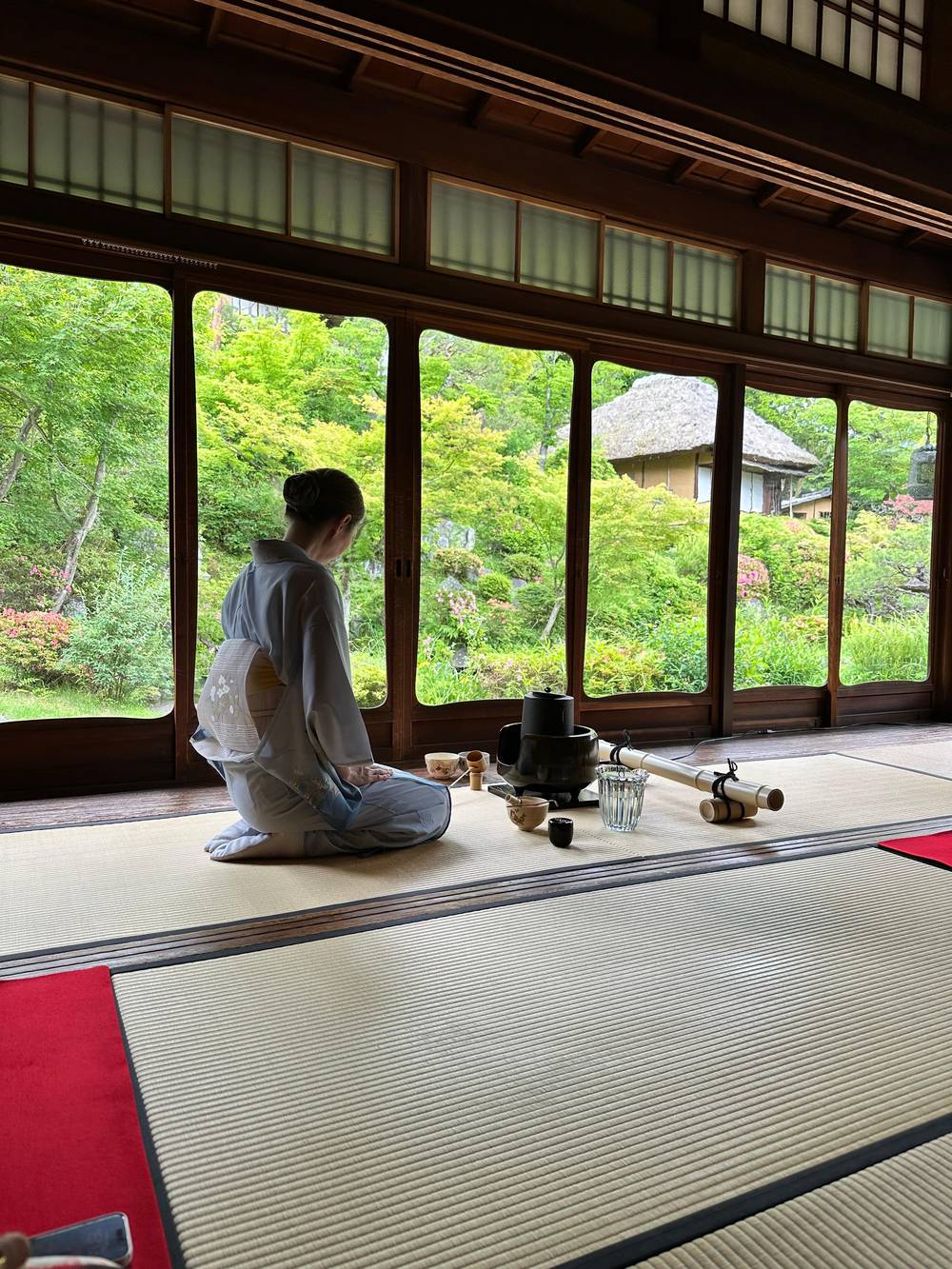
Garden tea house ceremony near Kiyomizu-dera, Kyoto
★ 4.9 · 4,282 written reviews
Brief answer
Japanese tea ceremony etiquette for tourists is forgiving: minor faux pas are overlooked and formal dress is not required for visitor sessions, so the main habits are shoes off, bowl turned and a word of thanks.
The habits
Your list · 9 items
A manners checklist for a first tea ceremony
Tick off each point as you complete it. This device keeps your progress.
0 / 9 ready
Ready to go. Only the booking is left: a bowl of matcha in a garden near Kiyomizu-dera.
Save a placeNobody expects a visitor to know the choreography. This guide gives the handful of manners that matter, shows where the schools differ, and says plainly which slips a host will simply overlook.
Editorial team, teaceremonykyoto.click · Updated November 6, 2026 · A 7 min read
Key facts
- MistakesMinor faux pas are always overlooked, and visitors are not asked for formal attire.1,2
- ShoesGuests take off their shoes before the waiting room of the tea house.3
- SeatingSit comfortably on the tatami; a Nara head priest prefers that to formal kneeling.4
- The bowlRotate it slightly before sipping so you do not drink from the front.5
- ThanksName one detail that moved you, and the host will know it was noticed.6
What a visitor is really expected to do
Japanese tea ceremony etiquette has a reputation for being strict, and the strictness is real for people who train in it for years. For a visitor the picture is gentler. The national tourism organization says plainly that minor faux pas are always overlooked, and that sessions put on to demonstrate the procedures to visitors do not require formal attire.1,2
That attitude shows up among hosts as well. A head priest who hosts tea for foreign travelers in Nara says the host has a responsibility to talk through the basic steps for visitors less familiar with chanoyu.7 At Taiho-an, the municipal tea house in Uji, the friendly staff will teach you the proper etiquette if you would like.8
The one thing to bring is a relaxed attitude. Relaxing matters most for beginners, because each step of preparing tea is highly formalized and the way you drink it has its own etiquette.9 Everything below is therefore a list of small, learnable actions rather than a code you must pass.
Seat styles
Four ways to sit at a tea ceremony
| Seat style | Where it appears | What it means for you |
|---|---|---|
| Seiza kneeling | The formal setting | Guests kneel while the tea master cleans the utensils19 |
| Sitting on the tatami | A tea temple in Nara | A comfortable posture instead of formal kneeling4 |
| Tatami benches | Taiho-an in Uji | Provided for guests not used to seiza20 |
| Table and chairs | A Kyoto lesson in ryurei style | The style employs tables and chairs21 |
Seating differs from venue to venue, so ask which style your booking uses before you go.
Shoes, bows and the first look
Start at the door. Guests take off their shoes before being shown into the waiting room of the tea house.3 Wear socks you are happy to be seen in, and shoes that slip off without a struggle. Then, after a silent bow from the host, hands are washed and the mouth rinsed at a stone basin.10
Bows are small and frequent. When tea or sweets are served, you first exchange a bow with the guests next to you on both sides.11 In the formal tradition bows and greetings go to the other guests and to the host at the appropriate times,16 and just before drinking, after bowing to each other, the guests bow politely to the host to show gratitude.17
Then comes the first look. Guests are expected to comment on the hanging scroll in the alcove or on the seasonal flower arrangement.12 The scroll, the flowers, the bowl and the sweet together offer a glimpse of the appreciation for changing seasons and the heart of hospitality.18 A single remark such as noticing the season in the flowers is a perfect contribution.
Your manners in order
Where a guest's manners come in
Door
Shoes and basin
Take off shoes, then wash hands and rinse the mouth at the stone basin.3,10
Greeting
Bow to host and guests
Exchange a bow with the guests next to you when tea or sweets are served.11
Look
Scroll and flowers
Comment on the hanging scroll in the alcove or the seasonal flower arrangement.12
Sweet
Eat before the tea
Eat the seasonal sweet in about three bites before the tea is served.13,14
Bowl
Raise, turn, sip
Raise the bowl, rotate it slightly, sip, then compliment the tea and the bowl.5
Return
Wipe and turn back
Wipe the rim with your fingers and turn the bowl back to its original position.15
Thanks
One kind remark
Comment on the one aspect that moved you most, to thank the host.6
Sitting: kneeling, tatami and chairs
The classic position is seiza, kneeling with legs folded under you. In a formal setting the tea master begins cleaning the utensils as soon as the guests are seated that way.19 For anyone whose knees disagree, there is good news from people who host: the head priest at Jikoin encourages guests to sit comfortably on the tatami rather than in the formal kneeling position.4
Venues also build for visitors. Taiho-an provides tatami benches, so you can enjoy matcha comfortably even if you are not accustomed to seiza.20 The Urasenke Center in Kyoto teaches a lesson in the ryurei style, which employs tables and chairs.21 If you need a chair, ask before you book, and say so again when you arrive.
Posture inside the room is quiet as well. In the formal tradition a guest walks inside taking three steps every half a tatami,23 and sits 8 sun, 24 cm, back from the border of the tatami, with the bowl and the paper for sweets placed in that space.24 You will not be measured, but the idea is useful: keep your things neat and close, and leave the host room to work.
Your situation
What matters most to you at the tea house?
Find your worry and read the answer
If I am afraid of getting it wrong
Relax: slips are forgiven
Japan's tourism organization says minor faux pas are always overlooked.1
If My knees dislike the floor
Ask for a bench or chair
Taiho-an provides tatami benches for guests not used to seiza.20
If I want to take photos
Ask the host first
Do not photograph others without permission, including people in traditional attire.22
If I did not bring formal clothes
Wear what is comfortable
Visitor sessions do not require formal attire.2
If I want to thank the host well
Name one detail
Comment on one aspect that particularly moved you.6
The sweet: how to eat it properly
The sweet is part of the manners. A seasonal wagashi is eaten before the tea is served, to prepare the palate, unlike European high tea where the two are taken at the same time.13 The sweetness is deliberate, set against the gentle bitterness of the green tea.26 The Nara head priest agrees: the sweet should be tasted before the first sip.27
How you handle it depends on how it arrives. If the sweets are served in one dish, you serve yourself from it, using a piece of kaishi paper as a plate.28 Cut it as you eat, in roughly three pieces, rather than cutting it up in advance, though not every school follows this rule of three.14
Ask about it. The Kyoto City Tourism Association suggests asking for the name of the sweet and noticing how its shape and color depict the season and the host's message.25 The host usually consults the confectioner so that the sweets suit the occasion,29 so the question is a compliment.
Price a session
What a guided tea session costs for your group
Enter your party size and read off three starting prices
Weigh up 3 options
What a guided tea session costs for your group
Enter your party size and read off three starting prices
- Garden tea house45 minutes · starting at, per person $49
≈
View - Tea lesson45 minutes · starting at, per person $22
≈
View - Ju-An tea ceremony70 minutes · starting at, per person $29
≈
View
Starting prices on GetYourGuide, exchanged at the ECB reference rate. The booking page gives the exact price.
The bowl: turning, sipping and wiping
This is the step visitors worry about, and the rule is short. The recipient raises the bowl as a mark of respect, rotates it slightly to avoid drinking from the front, takes a sip and then compliments the tea and the bowl.5 The front is the side where the design is often painted, which is why the guidance at Taiho-an is to turn the bowl a couple of times before drinking.30
Drink in roughly three sips, the final one ideally ending with an audible sound to show you enjoyed it.31 When you finish, wipe the rim of the bowl with your fingers and turn it back to its original position.15 The bowl is then briefly admired and set down.32 The host usually selects a bowl to match the personality of the guest, so the admiring is a courtesy to a choice that was made for you.33
If the bowl is passed on, the next guest repeats the procedure until every guest has sampled the tea.34 At a formal thick tea, the guests share a single bowl, no smoking is allowed in the tea room, and zabuton cushions are not used.35,36 You are unlikely to meet that setting in a visitor session, but it explains why the group holds the bowl so carefully.
Video
Things to avoid when joining a tea ceremony
Let's ask Shogo on YouTube · The video stays unloaded until you press play.
I’d encourage visitors to comment on one aspect of the experience which particularly moved them, and in doing so express their appreciation to the host.
Speaking, thanking and taking photos
Conversation in a tea room is brief and purposeful. At a formal gathering the main guest asks the host about the name, the maker and the place of the tea, and the same for the sweets.37 A visitor can borrow the idea. The head priest at Jikoin encourages visitors to comment on one aspect of the experience that particularly moved them, as a way of expressing appreciation to the host.6
Thanks continue after the session. In the formal tradition one of the guests visits the host the next day to convey the thanks of all of the guests.38 You will not be asked to do that, but a kind note or a review afterward carries the same spirit. Serious students go further: tea schools across the country offer courses in the precise steps, and proficiency takes many years.39,40
Photographs need a word of permission. Japan's national tourism guidance says not to take others' photos without permission, including people in traditional attire, unless at a designated event for such purposes.22 Many shops and museums have signs showing where photography is or is not permitted.41 In a tea room, ask the host before you lift the camera, and ask before you photograph a fellow guest.
What to wear and what to book
Formal clothing is optional. The tea master wears a kimono, and guests at formal occasions should follow suit, but rituals put on to demonstrate the procedures to visitors do not require formal attire.2 Wear something you can sit in comfortably, with socks that are clean, and leave bulky bags with the host or at the door.
When you choose a session, favor one that explains itself. The listing for this site's garden tea house names an English-speaking instructor, a 45 minute session, free cancellation up to 24 hours ahead, and a starting price of $49. If you want to practice the moves rather than only follow them, the 45 minute lesson in the calculator below is priced from $22.
Whichever session you choose, remember what the ceremony is for. Urasenke, the school that publishes official English guidebooks for guests, describes the host and the guest sharing a bowl of tea and realizing that the time shared can never be repeated.42,43 Manners are how both sides show that they know it.
FAQ
Questions answered quickly.
Do tourists have to follow strict rules?
Do I have to kneel the whole time?
Should I eat the sweet before the tea?
How do I hold and turn the bowl?
Can I take photos in the tea room?
What should I say to the host?
A head priest who hosts tea encourages visitors to comment on one aspect that moved them.6
Will an English-speaking host explain the steps?
The garden tea house session names an English-speaking instructor.
Sources
- Japan National Tourism Organization · Japanese Tea Ceremony ↩
- Japan National Tourism Organization · Japanese Tea Ceremony ↩
- Japan National Tourism Organization · Japanese Tea Ceremony ↩
- Japan National Tourism Organization · Masters Series: Part One The Art of Japanese Tea Ceremony ↩
- Japan National Tourism Organization · Japanese Tea Ceremony ↩
- Japan National Tourism Organization · Masters Series: Part One The Art of Japanese Tea Ceremony ↩
- Japan National Tourism Organization · Masters Series: Part One The Art of Japanese Tea Ceremony ↩
- Another Kyoto Official Travel Guide · 5 Amazing Experiences in Uji City Related to Uji Tea ↩
- Another Kyoto Official Travel Guide · 5 Amazing Experiences in Uji City Related to Uji Tea ↩
- Japan National Tourism Organization · Japanese Tea Ceremony ↩
- Kyoto City Tourism Association · Enjoying Kyogashi, the Traditional Sweets of Kyoto ↩
- Japan National Tourism Organization · Japanese Tea Ceremony ↩
- Japan National Tourism Organization · The Definitive Japanese Tea Experience ↩
- Japan National Tourism Organization · The Definitive Japanese Tea Experience ↩
- Another Kyoto Official Travel Guide · 5 Amazing Experiences in Uji City Related to Uji Tea ↩
- Omotesenke Fushin'an (official English website) · Forms and behavior: receiving tea ↩
- Omotesenke Fushin'an (official English website) · Forms and behavior (introduction) ↩
- Another Kyoto Official Travel Guide · 5 Amazing Experiences in Uji City Related to Uji Tea ↩
- Japan National Tourism Organization · Japanese Tea Ceremony ↩
- Another Kyoto Official Travel Guide · Experience the World of Tea with All Five Senses in "Kyoto Tea Country" ↩
- Urasenke Foundation (Urasenke Konnichian official English website) · Chanoyu Experience ↩
- Japan National Tourism Organization · Etiquette ↩
- Omotesenke Fushin'an (official English website) · Forms and behavior: receiving tea ↩
- Omotesenke Fushin'an (official English website) · Forms and behavior: drinking a bowl of thin tea ↩
- Kyoto City Tourism Association · Enjoying Kyogashi, the Traditional Sweets of Kyoto ↩
- Japan National Tourism Organization · The Definitive Japanese Tea Experience ↩
- Japan National Tourism Organization · Masters Series: Part One The Art of Japanese Tea Ceremony ↩
- Kyoto City Tourism Association · Enjoying Kyogashi, the Traditional Sweets of Kyoto ↩
- Kyoto City Tourism Association · Enjoying Kyogashi, the Traditional Sweets of Kyoto ↩
- Another Kyoto Official Travel Guide · 5 Amazing Experiences in Uji City Related to Uji Tea ↩
- Japan National Tourism Organization · The Definitive Japanese Tea Experience ↩
- Japan National Tourism Organization · The Definitive Japanese Tea Experience ↩
- Japan National Tourism Organization · The Definitive Japanese Tea Experience ↩
- Japan National Tourism Organization · Japanese Tea Ceremony ↩
- Omotesenke Fushin'an (official English website) · Forms and behavior: the second half of the tea event ↩
- Omotesenke Fushin'an (official English website) · Forms and behavior: the second half of the tea event ↩
- Omotesenke Fushin'an (official English website) · Forms and behavior: the second half of the tea event ↩
- Omotesenke Fushin'an (official English website) · Forms and behavior: the second half of the tea event ↩
- Japan National Tourism Organization · Japanese Tea Ceremony ↩
- Japan National Tourism Organization · Japanese Tea Ceremony ↩
- Japan National Tourism Organization · Etiquette ↩
- Urasenke Foundation (Urasenke Konnichian official English website) · Study Aids ↩
- Urasenke Foundation (Urasenke Konnichian official English website) · About Chado ↩
- Japan National Tourism Organization · Japanese Tea Ceremony ↩
Related reading