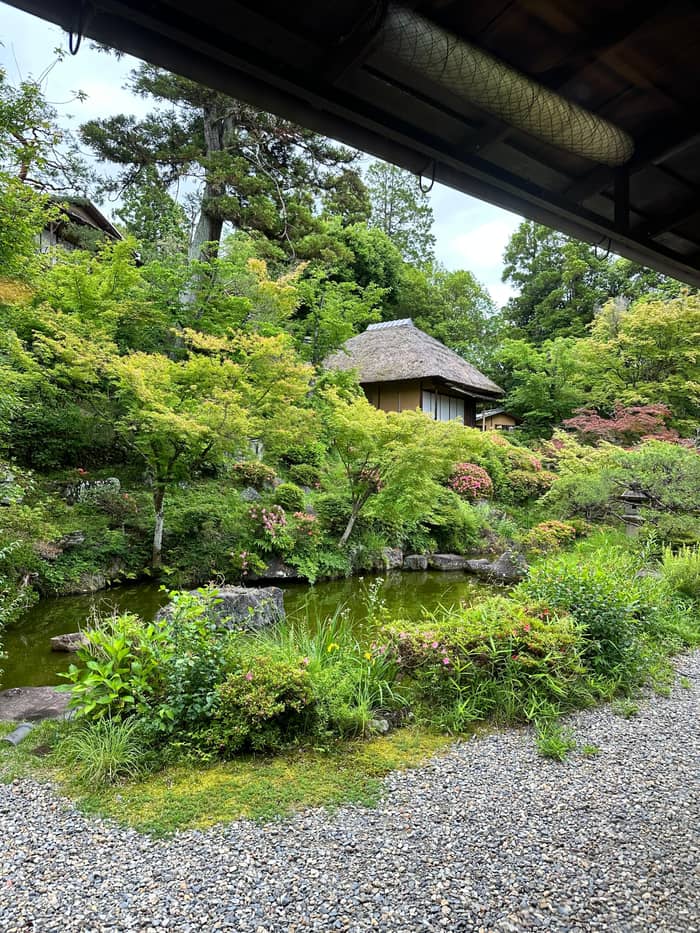
Stone-mill grinding
The grinding hour
Uji tea museum
- Length1 hour
- PlaceUji
- Rating4.8 from 976
Guides
Language
Currency
See what is open$49 and up · cancel at no chargePrice for your party
Weigh up 4 options
Choose how many are coming and see each listing's from price.
≈
View≈
View≈
View≈
ViewStarting prices on GetYourGuide, exchanged at the ECB reference rate. The booking page gives the exact price.
Matcha has a clear production chain and a home in Uji. This guide shows how to read a label, why the leaf is shaded, where Kyoto sells it and how to taste before you commit.
Editorial team, teaceremonykyoto.click · Updated November 6, 2026 · A 7 min read
Key facts
Matcha is a powder, but not every green powder is matcha. The Japan External Trade Organization says matcha's raw ingredient is tencha, which is made by steaming and drying tea leaves cultivated by blocking direct sunlight, without kneading.1 After drying, the tencha is de-stemmed and ground, and that powder is matcha.5 Web Japan describes the same chain from the farm: the trees are covered when new leaves sprout, then the shoots are steamed, dried, de-stemmed and ground.6
Tencha comes from the first picking. The Ministry of Agriculture, Forestry and Fisheries says buds that come out between late April and late May are picked by hand one by one and are mainly used for tencha and gyokuro, which are considered high-class teas.7 The shading method, called oishita, was developed in the 16th century at the request of tea masters such as Sen no Rikyu and gives dark green matcha with strong umami.8
Why does this matter when buying? A label can name a tea that sounds like matcha but follows a different chain. Knowing the chain lets you ask better questions in a shop: where the leaf was grown, whether it was shaded and how it was ground. The answers help separate real matcha powder from products that borrow the green color. Those three questions are enough to start a conversation in any tea shop.
Matcha beside its cousins
| Tea | How the leaf is grown | How it is prepared | Source |
|---|---|---|---|
| Matcha | Shaded, called tencha17 | Ground to powder, whisked17,10 | Tourism organization |
| Gyokuro | Shaded before harvest13 | Steeped at 50 degrees13 | Tourism organization |
| Kabusecha | Shaded for one week15 | Steeped at 70 degrees15 | Tourism organization |
| Sencha | Not stated as shaded14 | Steeped at 70 degrees14 | Tourism organization |
The temperatures are the Japan National Tourism Organization's steeping guidance; matcha is whisked, not steeped.13,14,15,16
The first label test is the word itself. JETRO says powdered tea made from teas other than tencha is defined not as matcha but as powdered tea, a category used as matcha for processing in products such as blended tea.2 A tin that says authentic matcha tea should be made from tencha, and a bag of green powder for baking may be a different product. That is the first fact to check on any tin.
Grinding is the second test, and a surprising one. Traditionally the tencha is ground in a stone mill or mortar, but JETRO says some matcha today is ground by machine and can still be classed as matcha.9 A stone mill is a sign of the traditional method, not a condition for the name matcha. Ippodo describes its matcha as stone-milled tea with a vibrant green color and smooth, rich flavor, and says it can be enjoyed as koicha, usucha or latte.11
A third tag is organic certification. JETRO says a growing amount of matcha grown organically is certified under the organic JAS system.12 Certification speaks about how the leaf was farmed, not about the taste. For taste, look at the color, the aroma and the way the seller describes the tea, and try it before you buy a large tin. A small sample is a better first purchase than a large tin.
Kyoto's matcha reputation rests on Uji. JETRO says matcha is produced mainly in Kyoto, Aichi and Shizuoka prefectures, with Uji City in Kyoto Prefecture and Nishio City in Aichi Prefecture traditionally famous for it.3 The Ministry of Agriculture, Forestry and Fisheries defines ujicha as green tea processed in Kyoto Prefecture from leaves grown in Kyoto, Nara, Shiga and Mie by a method that originated in Uji.18
The ministry adds that some long-established tea gardens in the area let visitors make matcha with a stone mortar, tour their factories or take courses.19 The Japan National Tourism Organization says Uji offers workshops in tea harvesting and ceremony in which visitors make their own tea.20 A day trip to Uji is a way to see where Kyoto's matcha begins; the Uji page on this site goes into it.
If you cannot go, a grinding experience brings the same idea into the city. One listing combines tea museum tickets with a matcha grinding experience in Uji, lasts 1 hour and starts from $23, with 976 reviews at 4.8. A Kyoto townhouse near Nijo Castle lets you grind tea leaves in a stone mill and then watch a ceremony. Each is a way to learn the process hands-on, and each fits into a single morning.
A short chooser
Say what you want the powder for and start from the matching step.
If I want to be sure it is matcha
Check for tencha on the label
If I want to see where it is made
Go to Uji
Uji is traditionally famous for matcha production.3
If I want to taste before buying
Book a ceremony
Our listing lasts 45 minutes and has you whisk your own bowl.
If I want to try grinding
The Uji grinding hour
It combines tea museum tickets with a grinding experience.
If I want a guide to prices
Shop within one range
Ippodo says higher price means more refined richness within a category.4
Three ways to taste
Stone-mill grinding
Uji tea museum
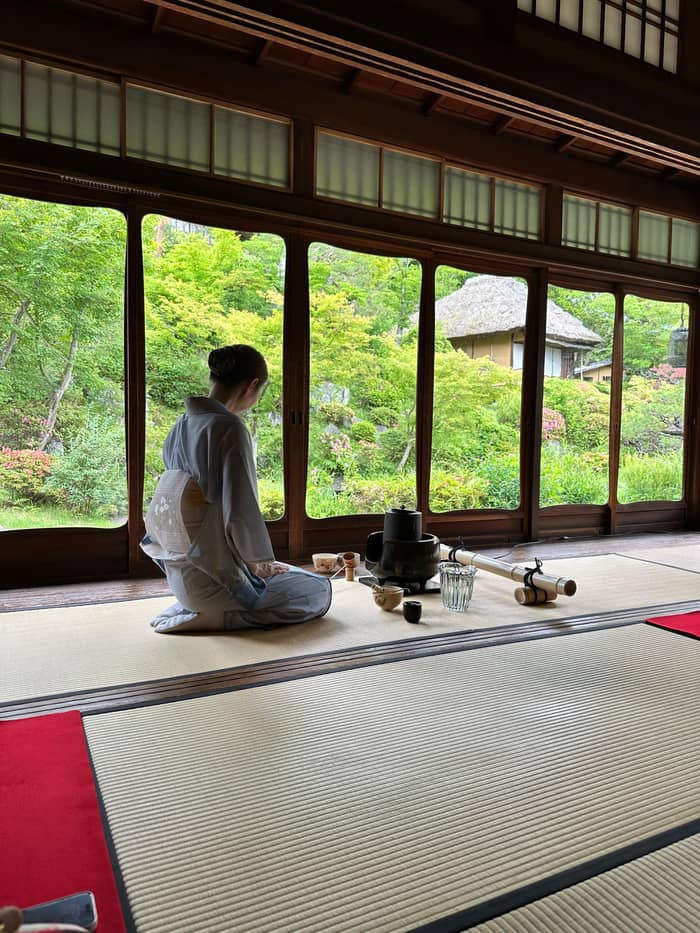
Whisk your own
Our listing
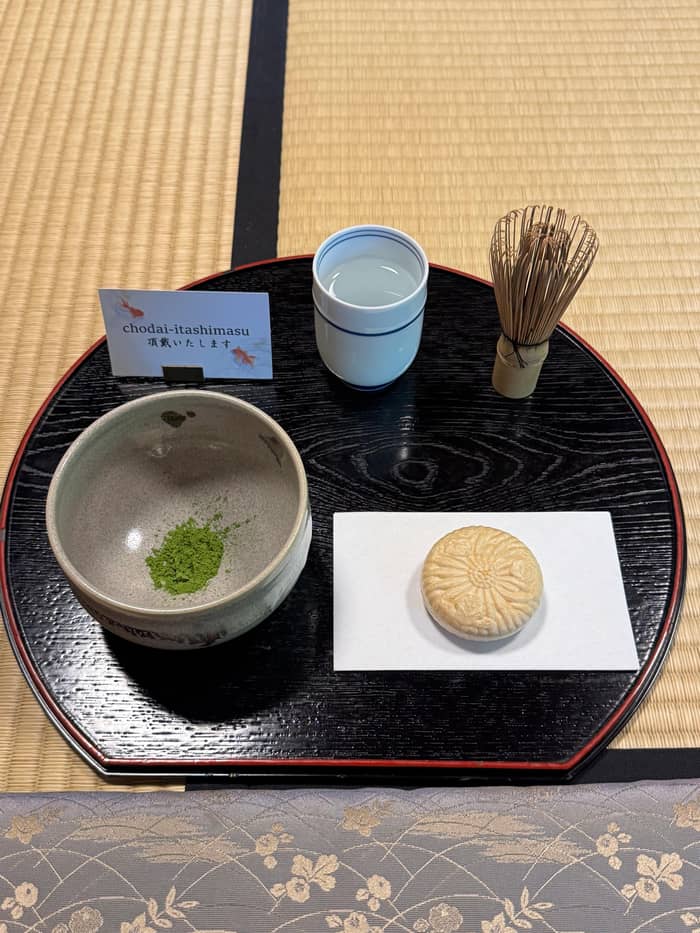
Private
Near Nijo Castle
Kyoto's tea shops are the usual place to buy. Ippodo, a tea merchant, describes sharing Japanese tea through its shops, its to-go stores, its tearooms and its classes and events.22 It offers about thirty brands across matcha, gyokuro, sencha and bancha, and says that within each category a higher price means a more refined richness while a lower price means a lighter taste.23,4 The tea-to-go stores and tearooms are a low-risk way to try before you buy a tin.22
That price-and-taste rule is a useful guide for any shop. Start in the middle of a range and move up or down once you know what you like. A shop's own staff are worth asking, since the Japan External Trade Organization notes that matcha is closely tied to the tea ceremony and its way of serving.21 Ask which tea is for thin tea and which for thick tea. A tin sold for thin tea will be the one you reach for most.
JETRO describes the styles: thin tea, usucha, is whisked with a bamboo whisk, while thick tea, koicha, uses a smaller amount of hot water in which the matcha is kneaded.21 Web Japan adds that for koicha a single bowl is passed around among guests, and for usucha each guest gets a serving.24,25 A tin for daily bowls and a tin for a special occasion may be different tins. Your own habits decide which you need.
From field to tin
Spring
Trees are covered when new leaves sprout so direct sunlight does not reach them.6
Late April to late May
The first-picked buds are hand-picked one by one for tencha and gyokuro.7
Next
The shoots are steamed and then dried without rolling.5
Then
After the stems and leaf veins are removed, the leaves are ready to grind.5
Grinding
Traditionally a stone mortar is used, though machine-ground matcha can still be matcha.5,9
At last
Powder is whisked in a bowl with hot water.10
Matcha is one of several Japanese teas, and the Japan National Tourism Organization lists the temperatures that suit each. Sencha, the most popular tea in Japan, is steeped at 70 degrees for 1 to 2 minutes.14 Gyokuro, shaded before harvest, is steeped at 50 degrees for 2 minutes 30 seconds.13 Kabusecha, shaded for one week, goes at 70 degrees for 2 minutes.15 The matcha row of the table below is the odd one out, because it is whisked, not steeped.16
Matcha is whisked, not steeped. The organization says 2 to 3 tea scoops are whisked from side to side, not in a circle, in 90 degree water until frothy.16 The powder is drunk along with the water, so it is worth buying a tea you trust and only as much as you will drink soon. In the chart, matcha sits at 90 degrees while gyokuro sits at 50, the two ends of the range, so a whisk-and-bowl routine is a different habit from steeping.16,13
If you buy more than matcha, the same shops sell the other teas in this table and in the chart. A shopper who wants one tin for the ceremony and one for the kitchen can pick matcha for both and keep the rest in another cupboard. The utensils page covers the bowl, whisk and scoop that go with the tin. Ranking Japanese teas is beyond this page; the point is that each tea has its own temperature and its own way of being made.
Video
Naoto | All About Matcha on YouTube · The video stays unloaded until you press play.
Matcha’s raw ingredient is Tencha, which is made by steaming and drying tea leaves cultivated by blocking direct sunlight, without kneading.
In the shop
A good way to calibrate your taste is to drink a bowl made by someone who knows the leaf. Our tour, a 45-minute tea ceremony in a garden tea house near Kiyomizu-dera, has a tea master prepare matcha and then has you whisk your own bowl. It starts from $49 and holds 4,282 reviews at 4.8. That review count is the largest of the nine listings compared on the venues page, so the sample of guest opinion is deep.
Other listings show Uji matcha in particular. The Ninenzaka machiya has guests prepare matcha from Uji and eat wagashi from a historic confectioner, from $35. The Fushimi table-style session lists matcha from an Uji tea farm, from $45. Both give you a flavor reference before you stand in a shop. A reference flavor makes every shop's tin easier to judge, whatever the label says.
After the tasting, ask the host what they would buy and why; the answer may point you to a local shop. Everything on this page about prices is a from price on a listing; matcha's own prices vary by shop and by tin, and are for the shop to state. The venues page lists nine rooms side by side if you want a different style for your tasting, from a temple room to a table with chairs. For the full picture of what a ceremony involves, the steps page walks through it from the first bow to the last bowl.
FAQ
JETRO says matcha ground by machine instead of a stone mill can also be classified as matcha.9
JETRO names Uji City in Kyoto Prefecture and Nishio City in Aichi Prefecture as traditionally famous for matcha.3
The ministry says buds from late April to late May are hand-picked and used mainly for tencha and gyokuro.7
A listing with a matcha grinding experience in Uji starts from $23.
JETRO says a growing amount of organically grown matcha is certified under it.12
Sources
Related reading
Not sure which Kyoto tea room suits you? A real person replies here.