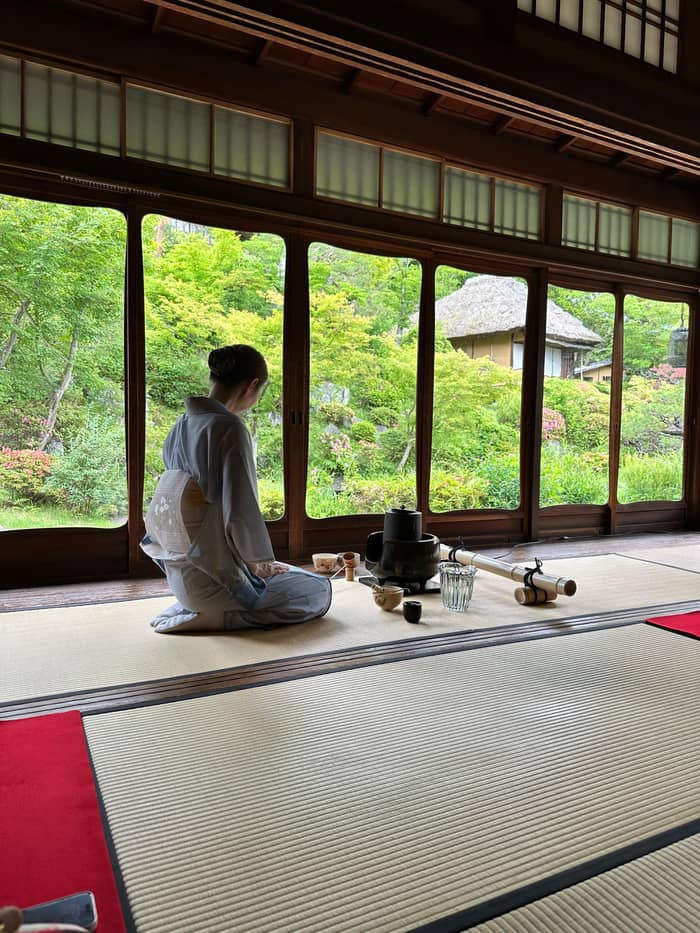
Garden view
The garden tea house
Our listing
- Length45 minutes
- Rating4.8 from 4,282
- CancelFree until 24 hours before
Guides
Language
Currency
See what is open$49 and up · cancel at no chargeMake-your-mind-up tool
Garden tea house ceremony near Kiyomizu-dera, Kyoto
★ 4.9 · 4,282 written reviews
Brief answer
The best tea ceremony in Kyoto depends on setting, seating and group size, because the nine venues compared here run from 45 minutes to 1.5 hours in temples, machiya, Gion kimono rooms and our garden tea house.
Length and venues
Two taps to your room
Say how you want to sit and what you want around the tea, and a matching listing appears with its from-price.
Best match for you
from $49
It lasts 45 minutes and looks out on a private garden near Kiyomizu-dera.
Best match for you
from $29
It lasts 70 minutes, takes up to 10 guests and offers seats on request.
Best match for you
from $49
It lasts 1.5 to 2 hours with over 200 kimono designs.
Best match for you
from $22
It lasts 45 minutes with a licensed Urasenke tea master.
Best match for you
from $45
It runs 1.5 hours at a table with chairs, with no floor sitting.
There is no single winner, because Kyoto tea rooms differ in setting, length, group size, floor or chair and price. Here are nine, side by side, with the one we link to explained first.
Editorial team, teaceremonykyoto.click · Updated November 6, 2026 · A 7 min read
Key facts
Ask which is the best Kyoto tea ceremony and you will get a different answer from every traveler, because the city offers so many versions of the same ritual. The Japan National Tourism Organization notes that temples, gardens, cultural facilities and hotels all have tea houses where visitors can try a ceremony, particularly in Kyoto.2 A single winner would be a guess. What can be compared honestly is the setting, the length, the group, the seating and the price, and this page lines up nine listings on exactly those points.
Length is the first filter. A full, formal ceremony can last several hours, and many venues offer abbreviated versions that suit foreign guests.1 Most listings here run 45 minutes, the Ju-An temple ceremony runs 70 minutes, and the table-style session in Fushimi runs 1.5 hours. A short session fits between two temples, while a longer one lets the host explain more. The kimono, maiko and private variants each get their own page on this site.
The third filter is how you sit. Some rooms expect you on tatami, some offer chairs on request, and two machiya listings are built around a table and chairs. The later sections go through each type in turn. First, the tour this site links to. None of these choices changes the basic shape of the visit, which is a host making tea in front of you and a bowl you drink; they change the room around it and the time it takes.3
Nine Kyoto listings side by side
| Venue | Length | Group and seating | From |
|---|---|---|---|
| Our garden tea house | 45 minutes | Chairs, per one reviewer | $49 |
| Ju-An temple tearoom | 70 minutes | Up to 10, seats on request | $29 |
| Urasenke tea master lesson | 45 minutes | Private group available | $22 |
| Higashiyama machiya | 45 minutes | Private or small, chairs | $32 |
| Ninenzaka machiya | 45 minutes | Up to 8, table and chairs | $35 |
| Fushimi machiya | 1.5 hours | Private or small, table | $45 |
| Gion kimono room | 1.5 to 2 hours | Up to 10 | $49 |
| Candlelit machiya | 45 minutes | Up to 8, floor or chair | $51 |
| Maiko session | 1.5 hours | Japanese, English translated | $50 |
Each price is a from price taken from its listing, so the fare you pay depends on the date, the option and the group.
The tour we link to takes place in a tea house in the Sannenzaka area near Kiyomizu-dera, in English, and lasts 45 minutes. The listing says the private garden around it was designed by Ogawa Jihei VII, and that the ceremony it demonstrates has lasted about 500 years. A guide welcomes you, a short talk covers the philosophy behind the ritual, and then the tea master prepares matcha while you drink a bowl with one traditional sweet.
The second half is hands-on. You whisk your own bowl under the tea master's guidance, ask questions, and finish with a group photo in the garden. The tour runs rain or shine, one reviewer says chairs were available, and the meeting point is found by walking about 50 metres down Sannenzaka and through a large gate on the right. The listing shows the garden in all four seasons, from cherry blossom to a possible snow-covered scene.
On numbers, the listing has 4,282 reviews at 4.8, with the guide scored 4.9 and value for money 4.7. It starts from $49, can be booked now and paid later, and is free to cancel up to 24 hours before. The ten newest English reviews on file all give five stars and praise the garden view, the guidance and making your own tea. The listing also carries a top rated badge and a loved by English speakers flag.
Who has reviewed what
Counts come from each listing's page, so they show how much feedback exists, not who is better.
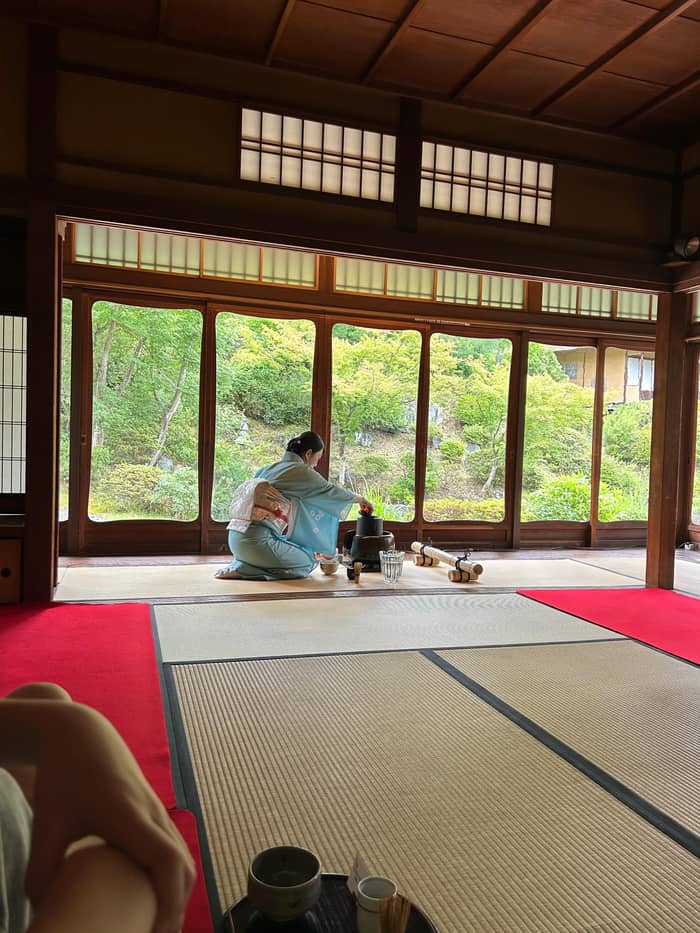
Ju-An is the temple option. The ceremony takes place in the Grand Tearoom at Jotoku-ji Temple, and the group meets a guide in the grounds, takes part in a purification ritual and removes shoes before entering. It lasts 70 minutes, is limited to 10 participants and starts from $29. Children from age 5 are welcome, though the tearoom is up three steps and is not wheelchair accessible.
Machiya, the wooden townhouses of Kyoto, are the middle option. One listing in the Higashiyama district runs 45 minutes with private or small groups from $32, and its hosts say they have no ties to geisha or maiko houses. Another stands on Ninenzaka, caps the group at 8, serves wagashi from a historic confectioner and starts from $35. A third, in Fushimi, runs 1.5 hours.
Gion is where the kimono rooms cluster. The Orizuruya listing lasts 1.5 hours, takes up to 10 guests, offers over 200 kimono designs and starts from $49. Nearby, a Maikoya tea ceremony in Kyoto takes place in a machiya registered as a Tangible Cultural Property, where a guide explains each step in English and sessions have six or so people.4,5,6 The same Maikoya venue is a 7-minute walk from Exit 9 of Kawaramachi Station on the Hankyu Line.7
Moods compared
Garden view
Our listing
Temple setting
Ju-An at Jotoku-ji
Chairs
Fushimi, south Kyoto
Sitting in seiza, the formal kneeling position, is the part first-timers worry about. The tourism organization describes guests seated in seiza as the tea master begins, but nothing obliges a modern session to demand it.8 Several listings offer help: Ju-An provides seats and stools, the Higashiyama machiya has chairs and tables, and the Karasuma-Shijo kimono session provides chairs on advance request.
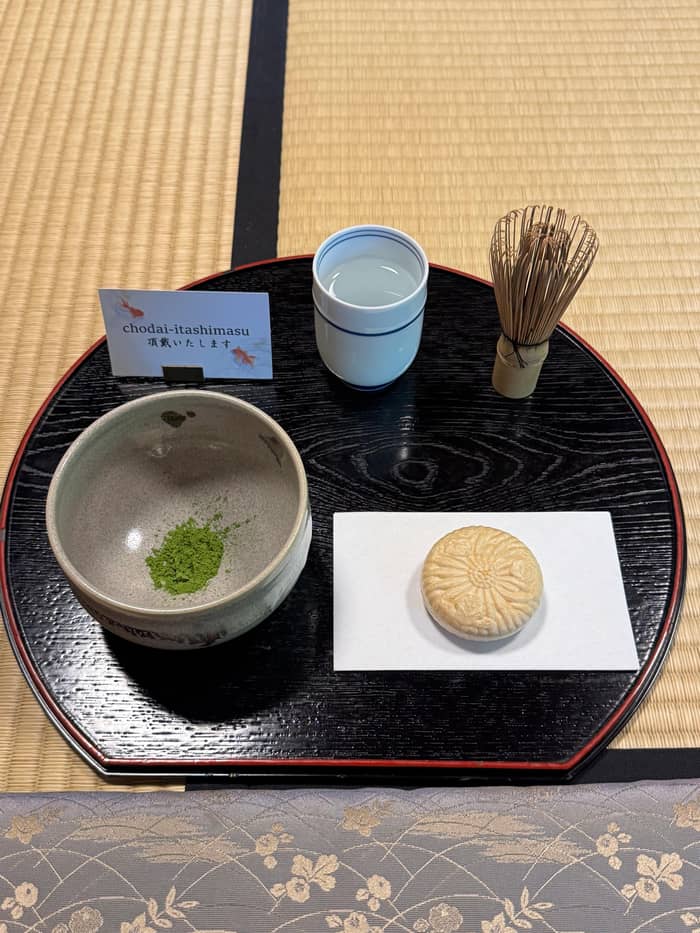
Two listings go further and make a table the default. The Ninenzaka machiya seats guests at a table in the ryurei style, so no kneeling is needed, and the Fushimi session is table-and-chair as well. Both attract strong ratings: 4.8 from 253 reviews on Ninenzaka and 4.9 from 1,322 in Fushimi. On our own tour one traveler wrote that chairs were available but the cushions turned out to be comfortable.
The candlelit session sits at the other end. Guests move through three rooms and sit on the floor or in a chair, up to 8 at a time, in silence, with the tearoom lit by candles. It runs 45 minutes from $51. If a quiet, dim room appeals more than a bright garden, that is the one to look at. The lesson with the Urasenke tea master also says it can provide chairs if you tell the supplier you may struggle on the floor.
Work out the bill
Choose how many are coming and see each listing's from price.
Weigh up 4 options
Choose how many are coming and see each listing's from price.
≈
View≈
View≈
View≈
ViewStarting prices on GetYourGuide, exchanged at the ECB reference rate. The booking page gives the exact price.
Our tour step by step
On arrival
A guide welcomes you and introduces the private garden around the tea house.
The talk
A short introduction covers the philosophy and traditions behind the ceremony.
The demonstration
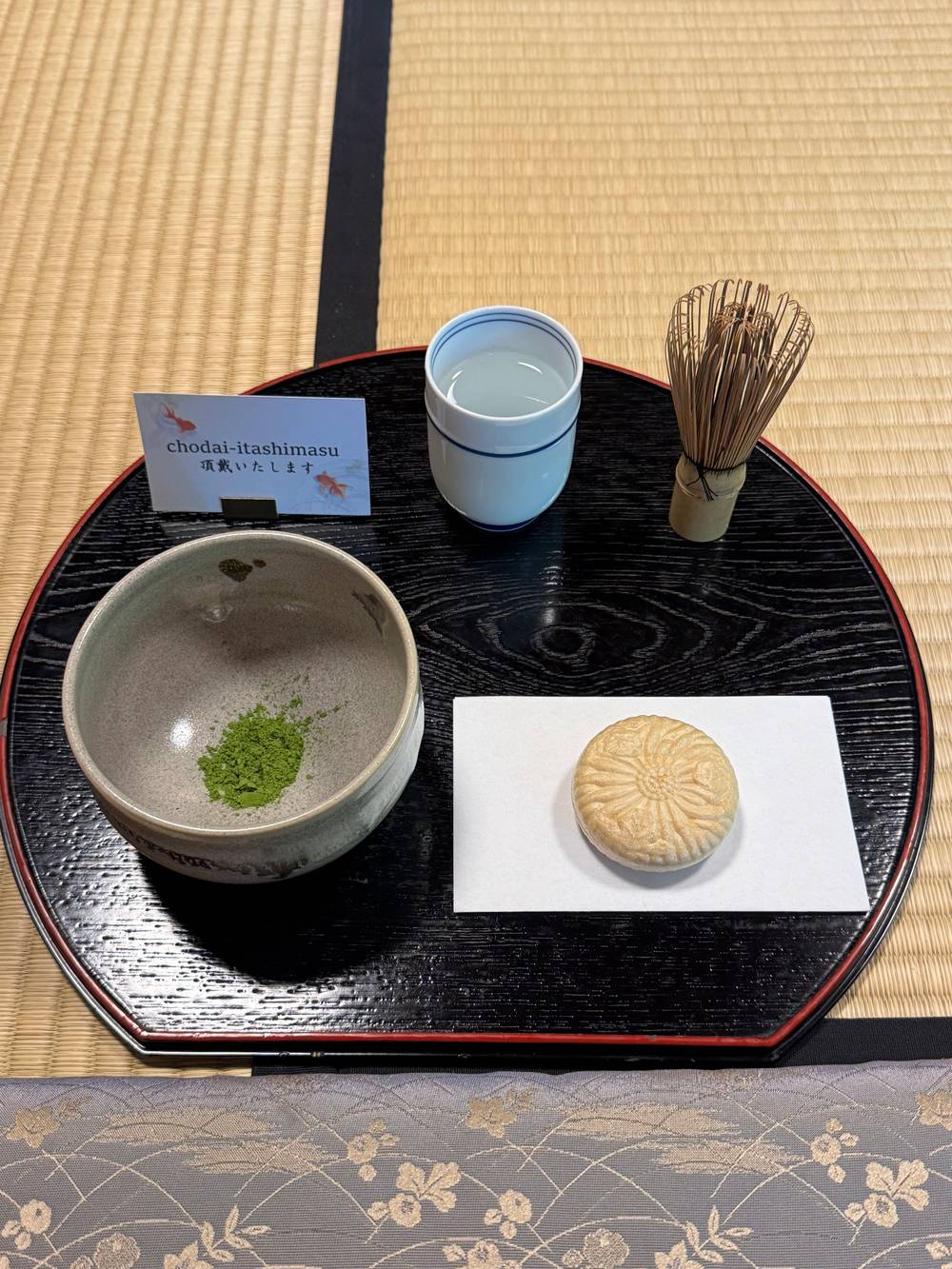
An experienced tea master prepares the bowl while you drink matcha with one traditional sweet.
Second half
You prepare a bowl yourself under the tea master's guidance.
Then
A question and answer session lets you ask about tea, its history and the ceremony.
To close
The visit ends with a group photo in the garden.
The from prices here span a wide range. A 45-minute lesson with a licensed Urasenke tea master starts from $22, the temple ceremony from $29, and the Higashiyama machiya from $32. The kimono listing at Tondaya, a heritage machiya in Nishijin, starts from $153, and it carries a lower rating of 4.3 from 317 reviews. The Fushimi table-style session sits in the middle at $45.
Who leads matters as well. The 45-minute lesson lists a licensed tea master of the Urasenke school, which the listing calls the biggest tea school in Japan. The Japan National Tourism Organization notes that there are dozens of tea schools, each with subtle differences.9 The maiko sessions work differently again: they are led in Japanese with English translation as far as possible, and one of them has a rating of 3.6 from 213 reviews.
A higher price buys different things in different listings. In Gion it pays for kimono and hair styling, in Fushimi for a longer session with calligraphy and photo props, and at Ju-An for a temple setting. Because every figure on this page is a from price, check the date and group size on the listing before you decide. Nothing in the facts says a pricier ceremony is more authentic, so judge each listing by what it includes and by its reviews.
Video
Aron and Erika on YouTube · The video stays unloaded until you press play.
While a full, formal tea ceremony can last several hours, many venues offer abbreviated versions that may be more suitable for foreign guests.
Before you book
Nearly every listing on this page offers free cancellation up to 24 hours before for a full refund, and most can be booked now with payment later. The two maiko listings are the exception, with free cancellation only up to 8 days before. That difference matters if your plans are loose. Free cancellation also covers the Ninenzaka and Higashiyama machiya listings, so those two are as flexible as ours.
Arrival rules vary. Fushimi turns away guests more than 30 minutes late, the candlelit session asks you to arrive 10 minutes early, and the lesson with a kimono add-on needs you there 20 minutes early. Our own listing runs rain or shine, so an umbrella is the only weather plan you need. Ju-An's group meets a guide in the temple grounds before going in, so allow time to walk through the gate.
Age limits also differ. Ju-An takes children from age 5, the Ninenzaka machiya does not accept under 6, and the Karasuma-Shijo kimono session does not allow under 7. Travelers with young children should check before choosing. The kimono page and the private page on this site go deeper into those two choices. The record for our listing states no age limit, so a family can ask the supplier before bringing small children.
FAQ
Listings of 45 minutes with chairs include our garden tea house (per one reviewer) from $49 and the Higashiyama machiya from $32.
A full formal ceremony can last several hours, but many venues offer shorter versions, and the listings here run from 45 minutes to 1.5 hours.1
The 45-minute lesson starts from $22 and the Tondaya kimono listing from $153, so the setting and extras decide the fare.
The Ninenzaka and Fushimi machiya use a table and chairs, and Ju-An and the Higashiyama machiya offer seats on request.
The maiko listings run 45 minutes to 1.5 hours and are led in Japanese with English translation as far as possible, with cancellation only up to 8 days before.
Ju-An is limited to 10, the Orizuruya kimono room to 10 and the Ninenzaka machiya to 8, while the Karasuma-Shijo listing may hold about 12 to 14.
The listing says the tour takes place rain or shine.
Sources
Related reading
Not sure which Kyoto tea room suits you? A real person replies here.