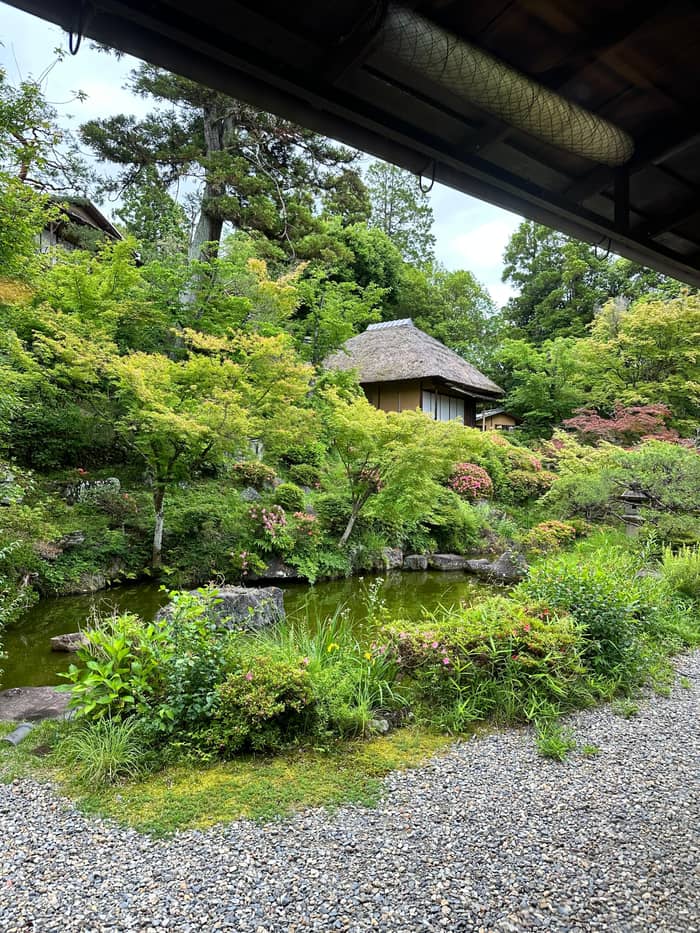
Four teas
The university-area tea room
Tokyo
- Length1 hour
- GroupUp to 8
- Rating4.9 from 602
Guides
Language
Currency
See what is open$49 and up · cancel at no chargeMake-your-mind-up tool
Garden tea house ceremony near Kiyomizu-dera, Kyoto
★ 4.9 · 4,282 written reviews
Brief answer
A Tokyo tea ceremony follows the same ritual as a Kyoto one, but Kyoto is renowned for it while Tokyo adds short sessions, kimono bundles and a garden teahouse.
Tokyo extras
Two taps to your city
Say where you will be and, in Tokyo, what you want, and a matching listing appears with its from-price.
Best match for you
from $49
It lasts 45 minutes in a garden tea house near Kiyomizu-dera.
Best match for you
from $29
It lasts 1 hour for up to 8 guests, with chairs and wheelchair access.
Best match for you
from $38
It serves a black tea, a gyokuro, your own matcha and genmaicha in 1 hour.
Best match for you
from $45
It adds kimono dressing and hair styling to a 1.5-hour ceremony.
Best match for you
from $41
It is private, 1.5 hours and hosted by a tea-farming family.
The ritual is the same in both cities, but the rooms, the prices and the day around them differ. This page compares sessions in Tokyo with the Kyoto ones so you can place the tea where your itinerary needs it.
Editorial team, teaceremonykyoto.click · Updated November 6, 2026 · A 7 min read
Key facts
Choosing between a Japanese tea ceremony in Tokyo and one in Kyoto is mostly a choice of backdrop, since the structure of the ritual stays the same. The host makes the tea in front of the guests, a procedure known as temae, and guests drink a bowl.4 What differs is the room and what surrounds it. The Japan National Tourism Organization notes that tea houses open to visitors are found in temples, gardens, cultural facilities and hotels, particularly in Kyoto, the ancient capital that is still the center of Japan's traditional culture.5
That sentence frames the comparison fairly. Kyoto has the tradition's old settings and the weight of history. Tokyo has convenience, a different mix of venues and, in some cases, its own twist on the program. A traveler who has both cities on the itinerary can do either, and a traveler with only one should do the one they will be in. Neither city is a lesser version of the other; they answer different questions about the same afternoon.
The sections below compare the rooms, the length, the price and the extras, then end with a plain recommendation. All prices are from prices on listings. Tokyo listings come from the same marketplace as our Kyoto one, and none of them is ours; we compare them so you can decide where to sit. The comparison uses the same measures for each: length, group size, seating and from price. Where a figure is missing from a listing, we leave it out.
Seven sessions in two cities
| City and place | Length | Group or extra | From |
|---|---|---|---|
| Tokyo, Asakusa casual | 1 hour | Up to 8, chairs | $29 |
| Tokyo, Shibuya | 50 minutes | Up to 8, kimono instructors | $25 |
| Tokyo, university area | 1 hour | Up to 8, four teas | $38 |
| Tokyo, Asakusa kimono | 1.5 hours | Kimono and hair | $45 |
| Kyoto, our garden tea house | 45 minutes | Chairs available | $49 |
| Kyoto, Ju-An temple | 70 minutes | Up to 10 | $29 |
| Kyoto, Gion kimono | 1.5 to 2 hours | Up to 10, hair | $49 |
Each price is a from price taken from its listing, so the final fare depends on the date, the option and the group.
In Asakusa, one listing is a casual ceremony of 1 hour for up to 8 guests, in English, on the 5th floor of a building, with chairs available and wheelchair access. It starts from $29 and holds 4.9 from 228 reviews. Another Asakusa listing adds a kimono and hair styling for 1.5 hours with up to 6 listed participants, from $45, and children under 7 are not permitted.
In Shibuya, a 50-minute session in a tatami room is led by instructors in kimono with over 10 years of experience, for up to 8 participants, from $25. A private option runs 1.5 hours, hosted by a tea-farming family an 8-minute walk from Shibuya Station, with organic ceremonial matcha and a talk on how matcha is grown, from $41. That tea-farm angle is the closest the Tokyo listings come to the leaf itself, and it pairs with the buying matcha page on this site.
The most reviewed Tokyo listing here is a 1-hour session across from the University of Tokyo, with 602 reviews at 4.9. Its program starts with a Shizuoka black tea and a tea cake, moves to a gyokuro with sweets from a long-established confectioner, then has you whisk your own matcha and finish with genmaicha, plus a certificate and a group photo. It starts from $38 for up to 8 guests.
How long you sit
Each bar is the length stated on the listing's own page.
Tokyo also has a setting that Kyoto cannot copy: a tea house on a tidal pond. GO TOKYO says the Nakajima teahouse stands in the middle of the pond at Hama-rikyu Gardens, where you can sit down to enjoy a cup of matcha throughout the year.2 The Japan National Tourism Organization lists matcha green tea and traditional sweets served there among the garden's highlights.3 That is a ceremony of a different kind from the taught sessions.
The gardens themselves were once reserved for imperial use and opened to the public in 1946.6 To reach them, the organization gives a 12-minute walk from Shimbashi Station.7 A cup in the teahouse is a bowl of matcha in a garden, not a taught ceremony, and it suits a traveler who wants atmosphere without a booking. Check the garden's own page for hours and fees before you go, and allow time for the walk from the station.
Tokyo also hosts a yearly festival of the art. GO TOKYO describes the 2026 Tokyo Grand Tea Ceremony, held at two venues, as the 17th edition.8 The 2026 edition has already taken place, but the event shows that tea in Tokyo is not only a visitor product.8 If you are in the city in the right season, look for the next edition on the official Tokyo travel site. The tea-ceremony calendar is worth a look if you plan around events.
Sessions compared
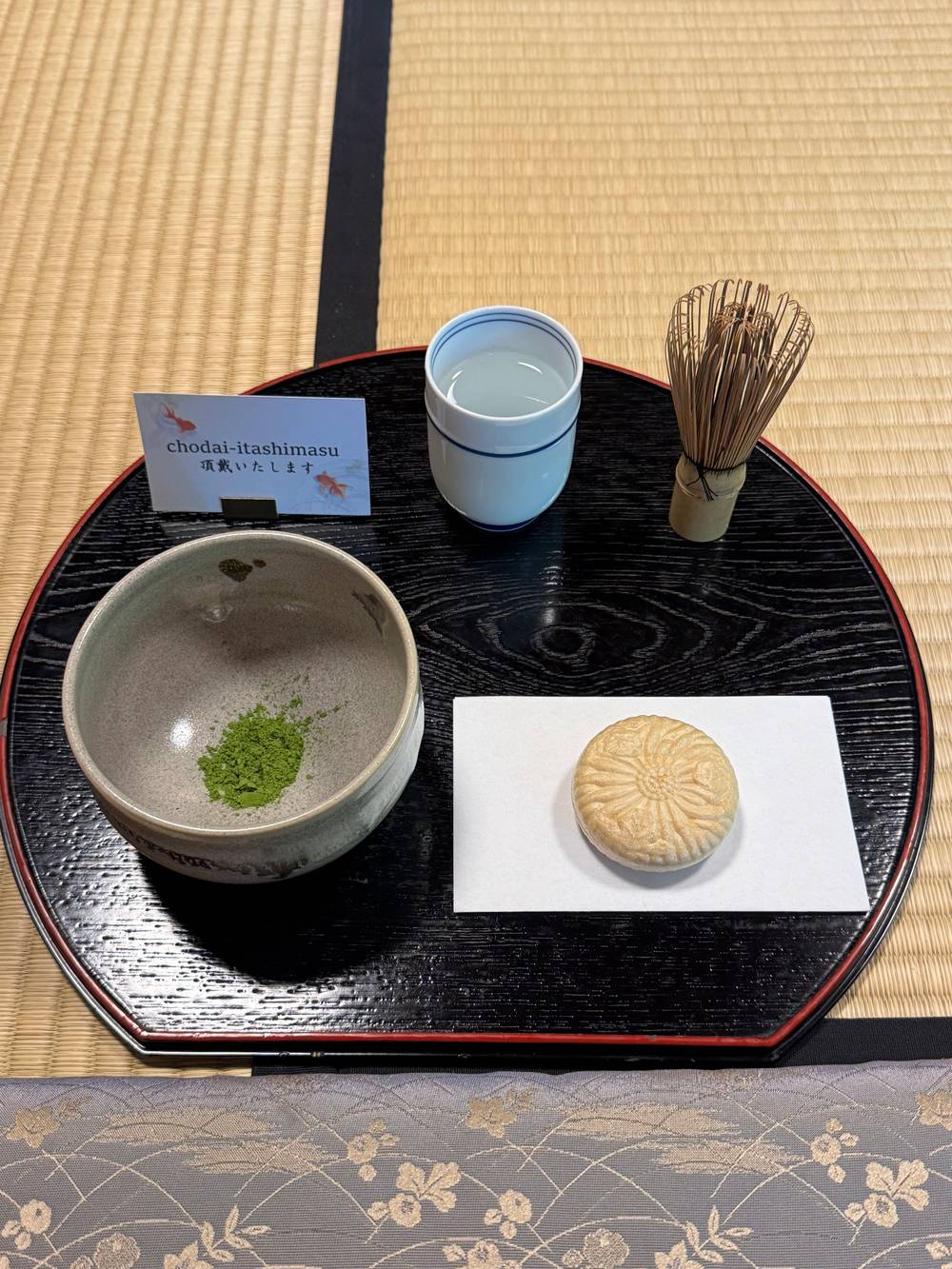
Four teas
Tokyo
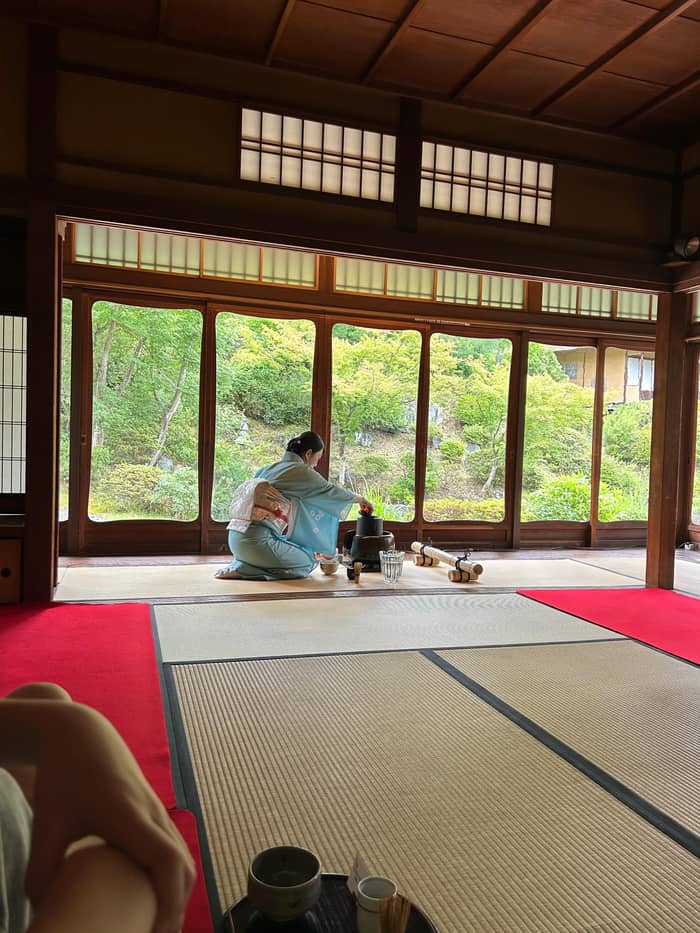
Beginner version
Tokyo
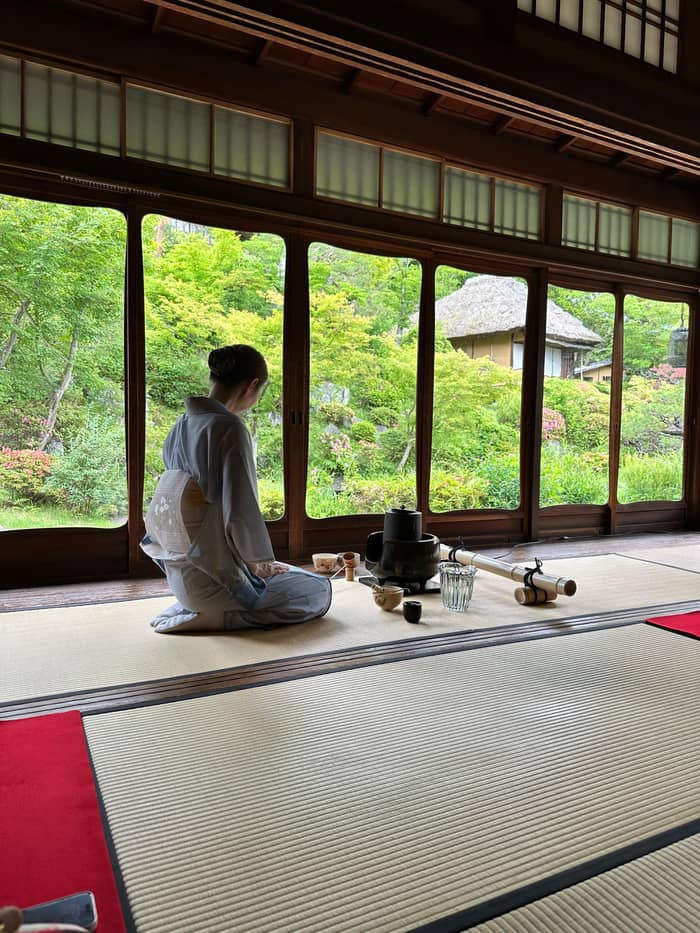
Garden view
Kyoto, our listing
Kyoto's strength is the number and variety of rooms. The Japan National Tourism Organization says Kyoto City is renowned for the traditional Japanese tea ceremony and that opportunities to experience it abound.1 Our own pick for a Japanese tea ceremony in Kyoto is a 45-minute ceremony in a garden tea house near Kiyomizu-dera, from $49, with 4,282 reviews at 4.8. The listing is flagged top rated and loved by English speakers.
The settings go further: a temple tearoom at Jotoku-ji for 70 minutes from $29, a candlelit machiya from $51, a tea master's home beside the Kyoto Imperial Palace from $55 and a Gion kimono room from $49. The venues page lays nine of them out side by side. The temple room takes children from age 5 and the candlelit session asks for silence, so the choice is as much about mood as about price.
Kyoto is also where the maiko sessions are found. Maiko are Kyoto's young apprentice performers, and the sessions that feature one run from 45 minutes to 1.5 hours.9 Add the machiya, the gardens and the temples around the tea rooms, and a Kyoto ceremony is often part of a day of sightseeing within walking distance. Each of those rooms stands within the same city, so you can see two in one trip.
Work out the bill
Choose how many are coming and see each listing's from price.
Weigh up 4 options
Choose how many are coming and see each listing's from price.
≈
View≈
View≈
View≈
ViewStarting prices on GetYourGuide, exchanged at the ECB reference rate. The booking page gives the exact price.
A Tokyo session in order
Start
The session opens with a Shizuoka black tea and a tea cake.
Next
A master brews gyokuro, served with sweets from a long-established confectioner.
Then
You whisk your own matcha under the guidance of a tea master.
Finish
A cup of genmaicha closes the tasting.
Keepsakes
You take home a certificate and a group photo.
Total
The whole session lasts 1 hour for up to 8 guests.
On length, the cities are close. The Tokyo listings here run 50 minutes in Shibuya, 1 hour in Asakusa and at the university tea room, and 1.5 hours for the kimono and private sessions. The Kyoto ones start at 45 minutes, with Ju-An at 70 minutes and the Fushimi and Gion sessions at 1.5 hours or more. Time is the cheaper variable: a short session leaves the rest of the day free, and a long one lets the host explain more.
On price, the lowest from prices in the two cities are almost the same: $25 in Shibuya against $22 for Kyoto's 45-minute lesson. The mid range is similar too, with Tokyo's kimono session from $45 and Kyoto's from $49 to $53. The big gap comes at the top, where a heritage kimono house in Kyoto starts from $153. Those mid-range figures are the fairest comparison between the two cities.
Ratings do not separate the cities either. The Tokyo listings here score between 4.9 and 4.9 on their own pages, and the better Kyoto ones sit between 4.7 and 4.9. Treat all of these as from prices and counts on the listing pages, which change; use them to shortlist, then read the page you are booking. Tokyo and Kyoto both have listings at every level of that range, so price alone rarely settles the choice.
Video
Adventures by Sky on YouTube · The video stays unloaded until you press play.
Kyoto City is renowned for the traditional Japanese tea ceremony, and opportunities to experience this abound.
Before you decide
Choose Kyoto if the room is part of the reason you are doing it. A garden tea house near Kiyomizu-dera, a temple tearoom or a Gion machiya makes the ceremony part of the place, and the Japan National Tourism Organization calls Kyoto the center of Japan's traditional culture.5 Our 45-minute tour fits between two temple visits. If you prefer a smaller crowd, the capped sessions in both cities are the better fit.
Choose Tokyo if the ceremony has to fit around a different plan. The listings in Shibuya and Asakusa sit beside the places most itineraries already include, they start from $25 and $29, and the Hama-rikyu teahouse adds a no-booking option.2 If you have time only in Tokyo, a ceremony there is a good way to taste the ritual; if you reach Kyoto later, do a second one in a different style.
Whichever you choose, the ceremony is shorter than the travel to reach it, so plan the day around the start time. The kimono page, the private page and the maiko page on this site cover the add-ons, and the steps page explains what happens in the room. If you do both cities, start with a plain ceremony in one and a themed session in the other, so each teaches you something different. A kimono bundle in Kyoto next to a four-tea tasting in Tokyo is one such pairing.
FAQ
The Japan National Tourism Organization says Kyoto is renowned for the tea ceremony and that opportunities abound there, while Tokyo sessions run 50 minutes to 1.5 hours.1
The Shibuya session starts from $25 and the Asakusa kimono session from $45.
The 45-minute lesson starts from $22, and our garden tea house from $49.
GO TOKYO says visitors can sit down for matcha there throughout the year.2
The Asakusa listing offers kimono dressing and hair styling in a 1.5-hour session from $45.
A private 1.5-hour session hosted by a tea-farming family starts from $41.
Kyoto sessions begin at 45 minutes and Tokyo sessions at 50 minutes, with kimono and private versions running 1.5 hours.
Sources
Related reading
Not sure which Kyoto tea room suits you? A real person replies here.