Full program
The premium tea session
Matcha with a maiko
- Length1.5 hours
- LanguageJapanese, translated
- CancelUp to 8 days
Guides
Language
Currency
See what is open$49 and up · cancel at no chargeMake-your-mind-up tool
Kyoto: Tea Ceremony with Maiko Premium
★ 4.3 · 416 written reviews
Brief answer
A geisha tea ceremony in Kyoto means a session with a maiko, the young apprentice of a geiko, and the bookable maiko tea sessions run from 45 minutes to 1.5 hours.
Words and rules
Two taps to your maiko
Say whether you want a dance and how long you have, and a matching listing appears with its from-price.
Best match for you
from $49
It is a 45-minute ceremony with a tea master and no maiko in the program.
Best match for you
from $25
It is a 15-minute Kyomai performance of two songs by a geiko or maiko.
Best match for you
from $49
It has two dances of 8 to 10 minutes in total, questions and photos.
Best match for you
from $50
It adds matcha, a talk and two sweets to a maiko's dance.
Best match for you
from $69
It runs 2 to 5 hours with an English guide and a members-only teahouse.
Maiko sessions pair matcha with a young apprentice, a talk and a photo, but they are not the private teahouse evenings of legend. Here is what each Kyoto listing includes, what Gion expects of you and the cost.
Editorial team, teaceremonykyoto.click · Updated November 6, 2026 · A 7 min read
Key facts
People searching for a geisha tea ceremony in Kyoto often use the word geisha, but the Kyoto City Tourism Association says many people use it by mistake: in Japanese the performers are properly called geiko, and maiko is the word for a young apprentice geiko.1 The Japan National Tourism Organization adds that a maiko is under 20 and usually starts her career as young as 15.4 Both maiko and geiko attend a special school, where tea ceremony is among the arts they study alongside flower arrangement, music and dance.5
Tea ceremony is part of that training, so a maiko brings real practice to the room, not just a costume. Even so, the sessions travelers can book are short programs built for guests who have never met one, and they are a long way from the hidden world of the ozashiki teahouses where geiko entertain.6 Whether a given session counts as an introduction or a performance depends on the listing, so read what it includes.
Those teahouses sit in one of five districts called kagai, which the tourism association names as Kamishichiken, Ponto-cho, Miyagawa-cho, Gion-Higashi and Gion-Kobu.6 The same page notes that visits to the teahouses were traditionally possible only through the invitation of trusted clients.2 A maiko tea ceremony in Kyoto is therefore one of the few ways to sit near one. Most visitors meet maiko through public performances and the bookable sessions compared below.
Maiko listings compared
| Listing | Length | What you get | From |
|---|---|---|---|
| Premium maiko tea | 1.5 hours | Talk, matcha, dance, photo | $50 |
| Short maiko tea | 45 minutes | Matcha lesson, photo, no dance | $31 |
| Meet-and-greet | 45 minutes | Two dances, Q&A, photos | $49 |
| Gion Kagai museum | 15 minutes | Two Kyomai songs, exhibit | $25 |
| Gion walk and teahouse | 2 to 5 hours | Walk, dance, talk, photos | $69 |
Each price is a from price, so the final fare depends on the date, the option and the group.
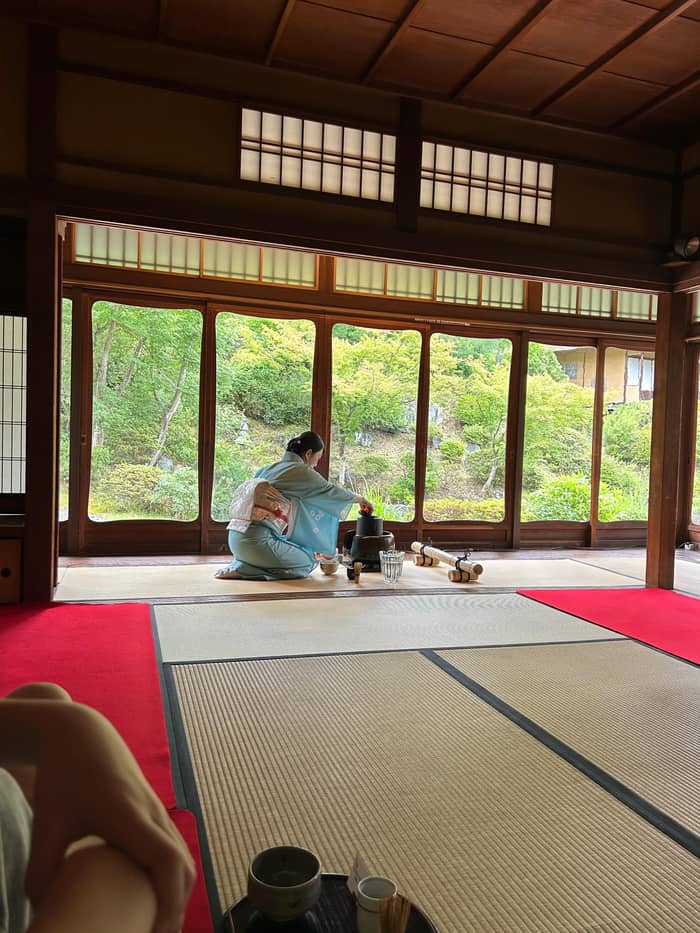
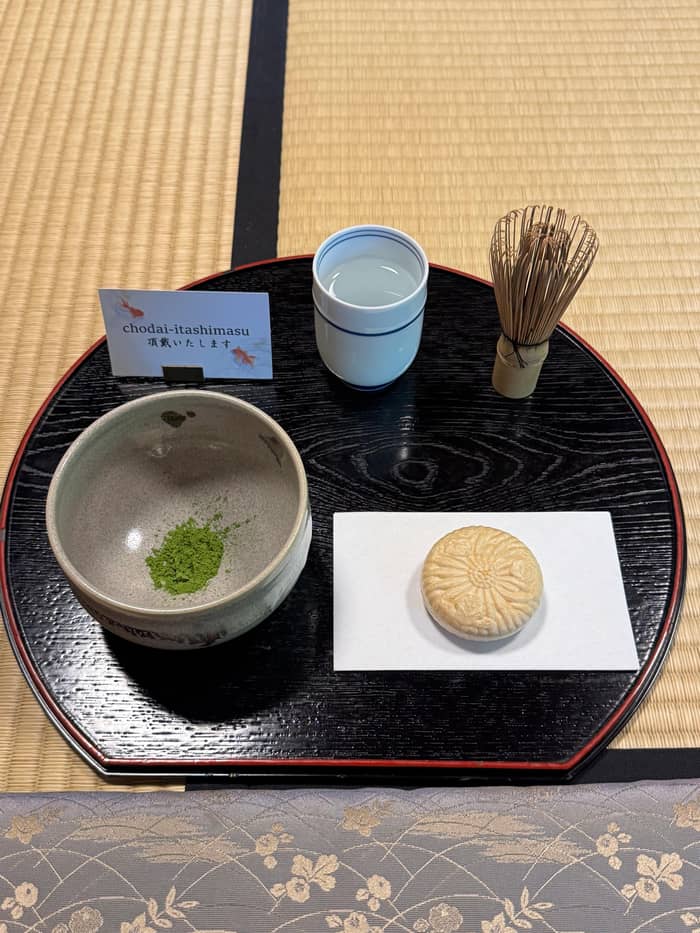
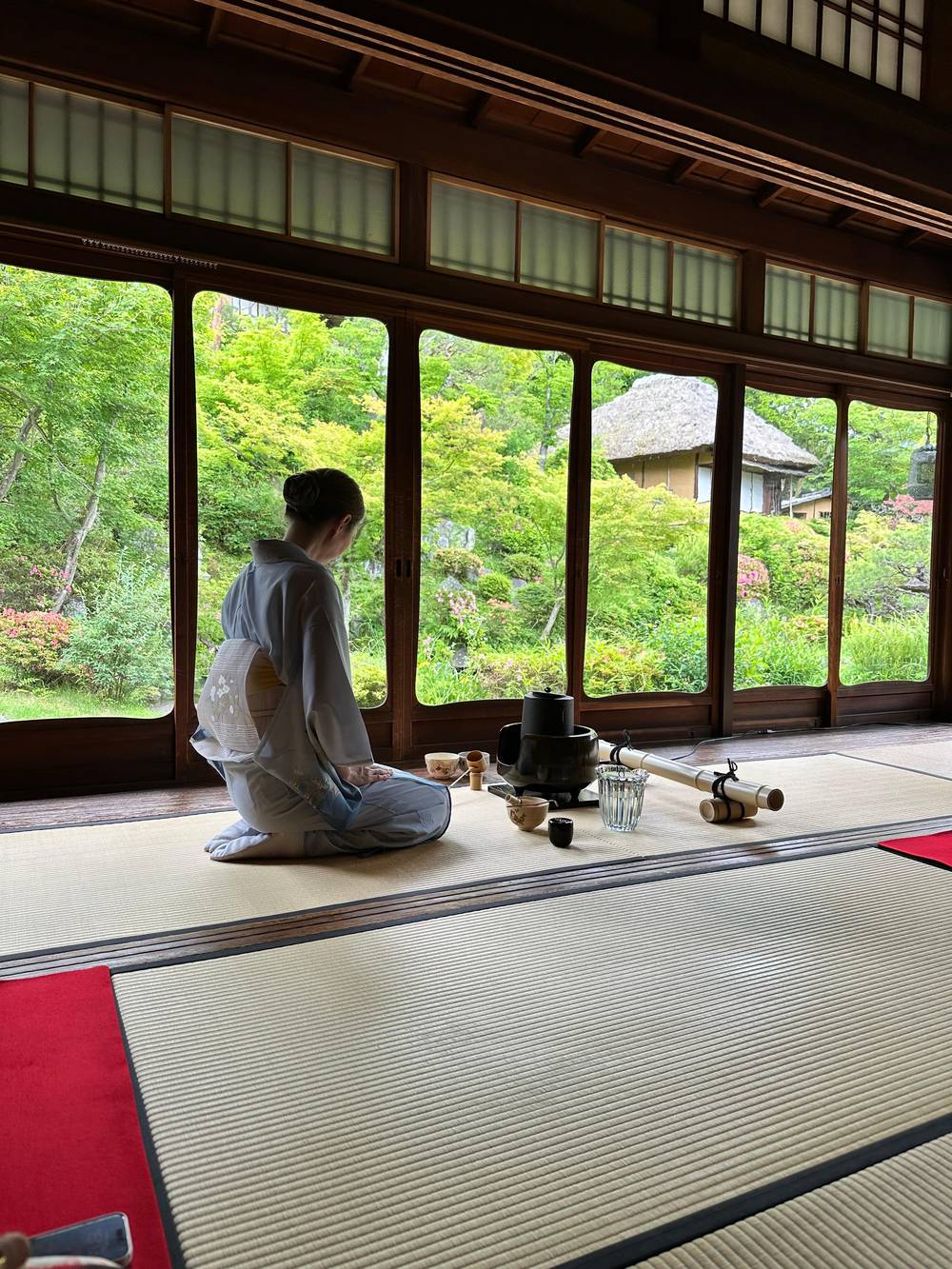
The premium maiko tea ceremony lasts 1.5 hours and starts from $50. A maiko shows how to make matcha, answers questions about her daily life, dances and poses for a photograph, and two sweets come with the tea. Then you make your own bowl, in the same way a guest at any other Kyoto tea ceremony would. Of the two maiko tea listings, this is the one whose program includes a dance.
The short version is a smaller product. It lasts 45 minutes, starts from $31 and is near Kyoto Station, but the listing states that the maiko's performance is not included. You still get the matcha lesson, a question time and a photo, and the maiko gives you a lucky charm. Its rating is 3.6 from 213 reviews, which is far lower than the premium listing's 4.3 from 416. It is the cheaper, shorter door into the same idea.
Both listings are led in Japanese, with English translation as far as possible, and both have a stricter cancellation rule than most Kyoto tea ceremonies: free cancellation only up to 8 days before. Each venue is reached by stairs, and the buildings have no elevator. If a smooth English-led session matters, read the language line before paying. The cheaper listing also has the weaker score, so weigh the saving against the 3.61.
Time with the performer
The Gion walk runs from 2 hours for the show only to 5 hours with the walking tour and kimono.
If the dance is what you came for, other listings are built around it. The meet-and-greet runs 45 minutes at the Kyoto Handicraft Center in English, with two traditional dances of 8 to 10 minutes in total, a question time, and 10 to 15 minutes of photographs with your own camera. It starts from $49, is wheelchair accessible and holds 398 reviews at 4.8. Reception opens 30 minutes before the show.
It is not private: the capacity is 30 people and you join other guests. A shorter, cheaper choice is the Kyomai performance at the Gion Kagai Art Museum, which lasts 15 minutes, features two songs by a geiko or maiko and starts from $25. The ticket is non-refundable, and photography is not allowed during the dance. Seats are unassigned, and late arrivals can still enter during the event.
For a Gion walk and a members-only teahouse, there is the guided option. It begins with a walk through Gion in English, then a maiko dances and talks with the group inside a teahouse, and it runs from 2 to 5 hours depending on the option. It starts from $69, holds 4.7 from 424 reviews and has the 24-hour free cancellation window. The Kyoto tourism association also notes that visitors can see maiko and geiko dance in one-hour performances at Gion Corner.7
Three ways in
Full program
Matcha with a maiko
Show first
Meet-and-greet
Longest
Teahouse and talk
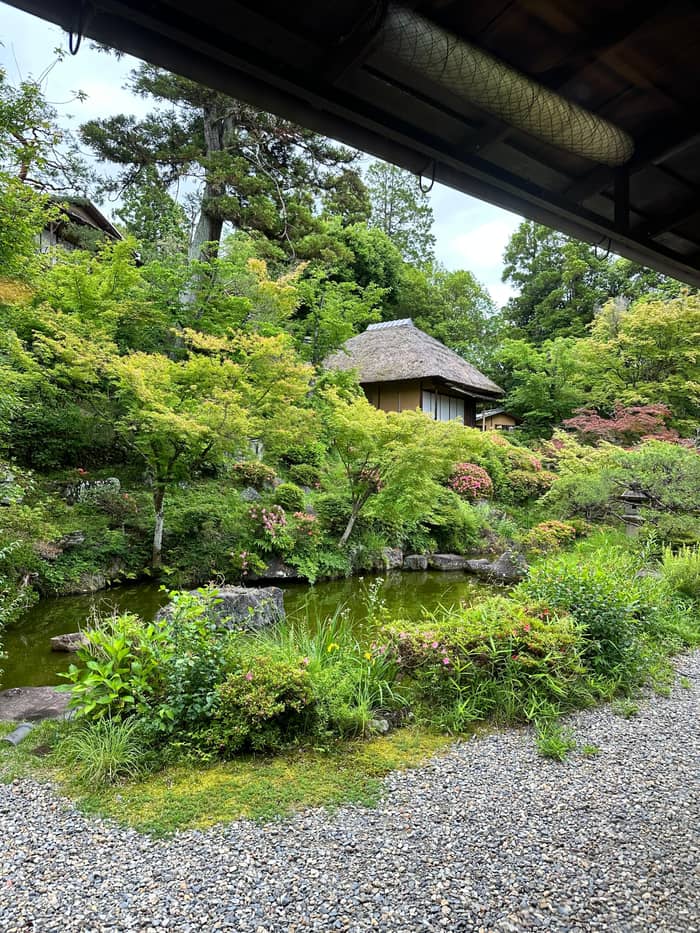
Not every booking in Gion involves an apprentice, and a tea ceremony in Gion, Kyoto can be a plain kimono session. The Orizuruya kimono ceremony, a Gion tea ceremony in Kyoto that lasts 1.5 hours and starts from $49, has you dress in a kimono and whisk matcha in a small group of up to 10. The Higashiyama machiya listing goes further in the other direction and says its trained instructors have no connection to geisha or maiko houses. The two together show how Gion bookings split into performers and rooms.
That frankness helps, since the wording in listings varies. A venue that promises a maiko is selling a performer, and one that promises a tea master is selling the ritual. Check which you are buying. The Japan National Tourism Organization describes Gion as the place where, among machiya streets, you might even glimpse a real geisha in training, known as a maiko.9 Read the first sentence of a listing before its price: the wording tells you whether a person or a place is the star.
Our own tour, the garden tea house near Kiyomizu-dera, belongs to the second group: a 45-minute ceremony led by a tea master, with matcha you whisk yourself and no maiko in the program. Gion is reached from Kyoto Station by regular buses in a 20-minute journey, or on foot from Gion-Shijo and Kawaramachi stations.10 Both choices are honest ones, and neither pretends to be something it is not.
Work out the bill
Choose how many are coming and see each listing's from price.
Weigh up 4 options
Choose how many are coming and see each listing's from price.
≈
View≈
View≈
View≈
ViewStarting prices on GetYourGuide, exchanged at the ECB reference rate. The booking page gives the exact price.
A maiko session in order
Welcome
The session opens with a maiko who introduces her way of life.
Demonstration
She shows how to make matcha and tells you how to do it.
Your turn
You then prepare your own tea, with two sweets alongside.
Questions
The question session is the program's highlight, with direct questions about daily life.
Dance
The listing says you closely watch a maiko dance.
To end
A commemorative photograph with the maiko closes the visit.
Gion's residents have asked visitors to follow plain rules. A message from Southern Gionmachi on the Kyoto tourism site says not to stop, touch, follow or take unauthorized photos or videos of any geiko or maiko you see walking around the district.3 It adds that geiko and maiko are not mascot characters, and that the area is not a theme park but a place where people live their daily lives.11,12
The Kyoto City Tourism Association's own guidelines repeat the point. They list following geiko and maiko, taking their photographs without permission, trespassing and photographing private property as forbidden acts that have been observed in areas such as Southern Gion.8 Booked sessions are the safer alternative: the photograph is part of the program and the performer expects it.
Even inside a booked event there are rules. The guided Gion option allows photographs only during the performance and the photo session, and asks you to get the maiko's permission before posting any picture online. The museum performance bans photographs during the dance. Treat each venue's rule as binding, and keep your camera down in the street. A venue's own rule outranks any general advice in this page, so read the notes on your booking.
Video
Let's ask Shogo on YouTube · The video stays unloaded until you press play.
Many people mistakenly use the word “geisha” to refer to Japan’s kimono-clad female performers, but in Japanese they are correctly referred to as either “geiko,” or “maiko” for young apprentice geiko.
Before you go
If you want the closest thing to a tea ceremony with a maiko, the premium session at $50 is the full program: matcha, a talk, a dance and a photo. If time is short and the budget matters, the 45-minute version at $31 gives the lesson and the photo but no performance. Start with the question of whether you want a performer or a ritual, since the listings answer it differently. The Q&A is the highlight on both maiko tea listings, as their notes describe it.
If the dance is the draw, the meet-and-greet at $49 or the museum performance at $25 serve it better than a tea session does. If you want a proper Kyoto tea ceremony with a tea master and a garden, our listing starts from $49 and lasts 45 minutes. Compare the price with what you get, not only with the rival listing. The conditions differ too: the museum ticket is non-refundable, while the meet-and-greet and our garden tea house are free to cancel up to 24 hours before.
Whichever you pick, remember that each price is a from price and that cancellation windows differ from 24 hours to 8 days to none at all. The venue comparison page lays the plain tea rooms out side by side, and the kimono page covers the garment if you want to dress for Gion. Kyoto City is renowned for the tea ceremony, and the Japan National Tourism Organization says opportunities to experience one abound.13
FAQ
On the maiko listings, the maiko shows how to make matcha and then you make your own bowl.
The 45-minute session starts from $31 and the 1.5-hour premium session from $50.
Kyoto's tourism site asks visitors not to take unauthorized photos or videos of geiko and maiko walking around the district.3
Visits to the ozashiki teahouses were traditionally possible through the invitation of trusted clients only.2
Both maiko tea listings say English translation is provided as far as possible.
A 45-minute meet-and-greet, a 15-minute museum performance and a Gion walk with a teahouse show all include dance.
Sources
Related reading
Not sure which Kyoto tea room suits you? A real person replies here.